
top of page
featured.png

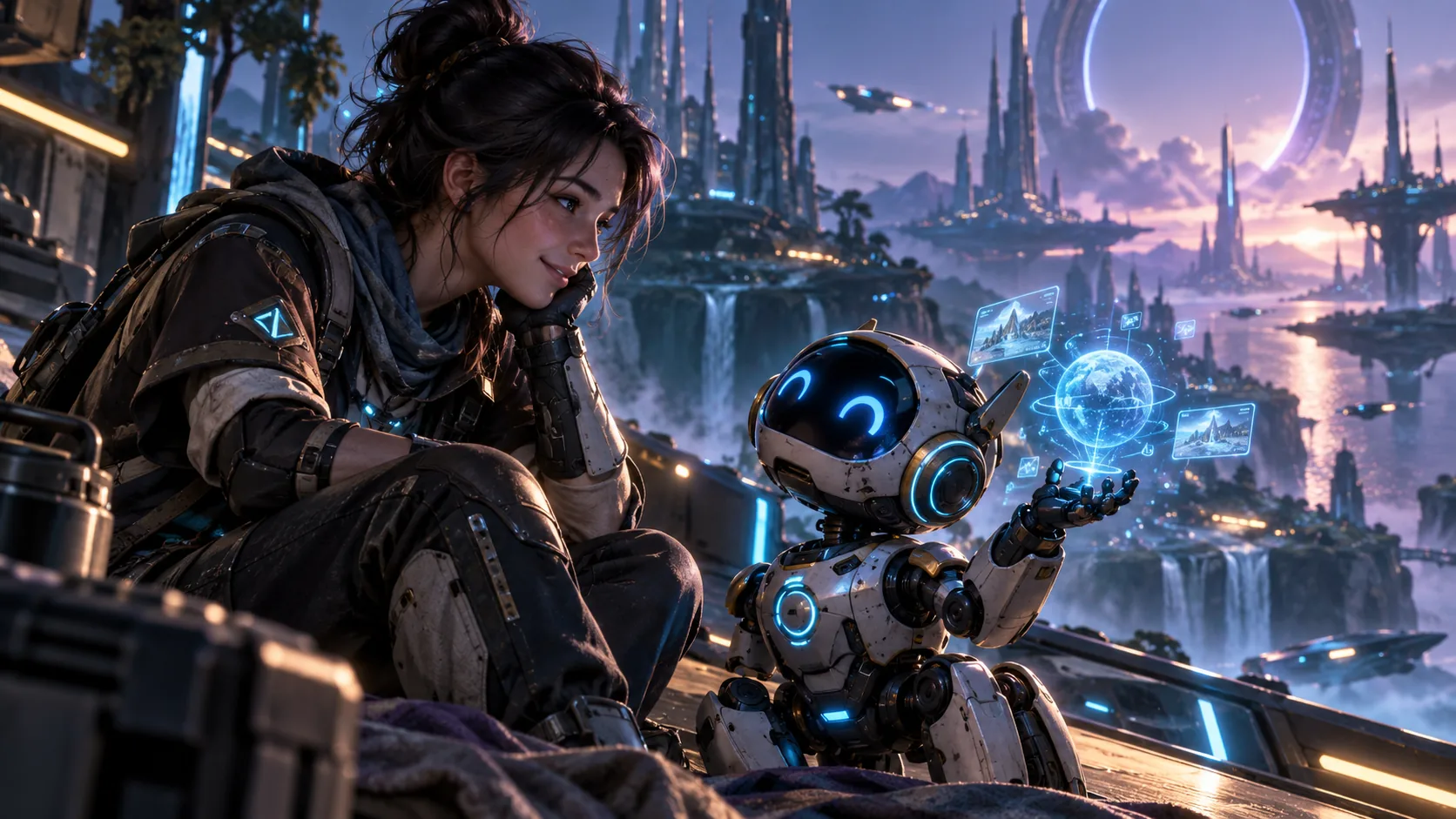
AI-DRIVEN NPCs & DIGITAL COMPANIONS

Creating responsive, emotionally aware characters that adapt to player behavior and narrative context.

OVERVIEW

AI-driven NPCs and digital companions shape how players experience interaction, presence, and emotional depth within a game world. Unlike traditional scripted characters, modern NPCs must react dynamically to player behavior, adapt to unpredictable contexts, and communicate personality through motion and expression. Their believability depends on animation that supports decision-making, emotional cues, and moment-to-moment variability.

​

This application focuses on creating movement, reactions, and behavioral animation tailored to AI systems — ensuring NPCs feel aware, responsive, and alive. Whether guiding the player, engaging in conversation, reacting to threats, or navigating the environment, AI-powered characters shape the richness and authenticity of gameplay immersion.

IMPORTANCE IN GAME DEVELOPMENT

Behavioral Readability

NPCs need animations that clearly convey their intentions — curiosity, alertness, fear, friendliness, suspicion — helping players understand their state and purpose.

Adaptive Emotional Signaling

Non-verbal cues such as posture shifts, gaze direction, and subtle reactions help NPCs respond meaningfully to player choices and world events.

Contextual Interaction Motion

NPCs must animate appropriately for the situation, whether investigating a noise, pointing, gesturing, assisting the player, or responding to environmental changes.

AI-Driven Reaction Loops

Animations must support frequent, reactive transitions for behaviors like noticing, responding, dodging, or repositioning.

Companion Presence & Personality

Digital companions rely on expressive, character-defining movements that reinforce their role — mentor, partner, protector, guide, or comic relief.

Autonomous Environment Navigation

NPCs require animations that work across varied terrain, obstacles, and dynamic world conditions, maintaining realism during movement adjustments.

Social & Conversational Behaviors

Gestures, idle breaks, micro-expressions, and turn-taking animations improve believability in dialogue exchanges.

Emergent Behavioral Variety

NPCs feel more alive when animations support procedural mixing, randomized idles, and non-repetitive motion that avoids robotic patterns.

HOW MIMIC GAMING CONTRIBUTES?

Mimic Gaming enhances AI-driven NPCs and digital companions by creating motion sets that integrate seamlessly with decision trees, behavior systems, and real-time procedural logic. Our focus is on providing expressive, modular, and context-aware animation that enables believable AI behaviors.

1.png

BEHAVIOR-FOCUSED MOTION CAPTURE SESSIONS

We design sessions specifically around how AI will use motion — alert states, idle variations, investigative behaviors, reactions, and environmental awareness. This produces animation tailored to branching logic rather than linear sequences.

2.png

EMOTIONALLY LAYERED REACTION CAPTURE

NPCs rely heavily on reactions — noticing danger, responding to the player, expressing curiosity, or shifting mood. We capture small emotional variants that give AI systems more granular choices, allowing characters to feel responsive and alive.

3.png

MODULAR MOTION LIBRARIES FOR AI DECISIONS

We create animation libraries structured into reusable components: look-arounds, gestures, mini-shifts, dodges, retreats, interest cues, warnings, and approach motions. These are built to snap into AI behavior trees without breaking flow.

4.png

COMPANION PERSONALITY PERFORMANCE

Digital companions require a distinct emotional tone, body language style, and movement rhythm. We capture guided performances shaped around personality archetypes — loyal partner, energetic scout, stoic guardian, playful creature — ensuring consistent identity across interactions.

5.png

PROCEDURAL-FRIENDLY MOTION STRUCTURING

All animations are prepared for blending, layering, and procedural modification. This includes neutralized stances, clean loops, and transition-friendly segments that can mix with locomotion, physics, or IK-driven behavior.

6.png

ENGINE-READY BEHAVIORAL RETARGETING

We retarget animations to rigs designed for AI — humanoid, creature-based, stylized, or hybrid. Motion is adapted to support unpredictable directional changes, start-stop behaviors, and dynamic decision-making without losing expressiveness.

Game Development

WHERE THIS IS USED IN THE PIPELINE?

NPC and companion animation integrates from early behavior planning through AI system implementation and final polish. Each phase uses these animations to enrich interactions and world reactivity.

Pre-Production

  • Defining NPC personality traits, interaction style, and behavioral tone

​

  • Prototyping reactions, idle sets, and companion personality cues

​

  • Testing AI decision logic with placeholder or early animation

​

  • Determining emotional range and movement vocabulary

​

  • Aligning AI designers, animators, and writers on behavioral goals

Production

  • Capturing reactive, idle, and contextual movement libraries

​

  • Recording personality-specific performances for companions

​

  • Creating transitions for AI movement, investigation, alertness

​

  • Building multiple intensity levels for emotion-based responses

​

  • Ensuring animation variety to avoid repetition during long play sessions

Gameplay Integration

  • Implementing animation sets directly into AI behavior trees

​

  • Connecting animations to triggers, conditions, and decision nodes

​

  • Supporting procedural blending during navigation or reactions

​

  • Aligning NPC responses with player actions and world events

​

  • Ensuring smooth transitions across unpredictable AI behaviors

Post Production

  • Refining emotional transitions for subtlety and clarity

​

  • Adjusting micro-behaviors and idle cycles for natural movement

​

  • Smoothing procedural blends for realism during real-time decision changes

​

  • Enhancing secondary motion for personality and authenticity

​

  • Optimizing animation footprints for performance across platforms

WHO BENEFITS FROM IT?

AI designers, animators, narrative teams, and gameplay engineers rely on these behaviors to create believable, responsive NPCs. This section highlights the departments supported by refined AI-related motion.

Animation Teams

Get expressive performances designed for non-linear use.

Gameplay Programmers

Receive modular, blend-friendly motion that works with procedural systems.

AI Designers

Gain animation sets structured for decision-making, state changes, and reactive behavior.

Narrative Designers

Benefit from NPCs that convey emotion and personality through movement, not just dialogue.

Level Designers

Gain believable NPC behaviors that support world interactivity.

Art Directors

Maintain visual and emotional consistency in companion characters and AI populations.

SUMMARY

AI-driven NPCs and digital companions define how alive and responsive a game world feels. Their movements, reactions, and emotional cues shape player perception and influence the overall quality of the experience. When NPCs behave intelligently — and look believable while doing it — they enrich exploration, storytelling, and moment-to-moment gameplay.

​

Mimic Gaming supports this through behavior-specific performance capture, personality-driven companion acting, modular reaction libraries, and engine-optimized structuring for AI use. Our workflows ensure NPCs and companions respond with clarity, intention, and emotional expression — transforming background characters into meaningful parts of the player’s journey.

​

By empowering AI characters with natural, readable motion, Mimic Gaming helps studios build worlds filled with personality, reactivity, and life.

bottom of page