OVERVIEW
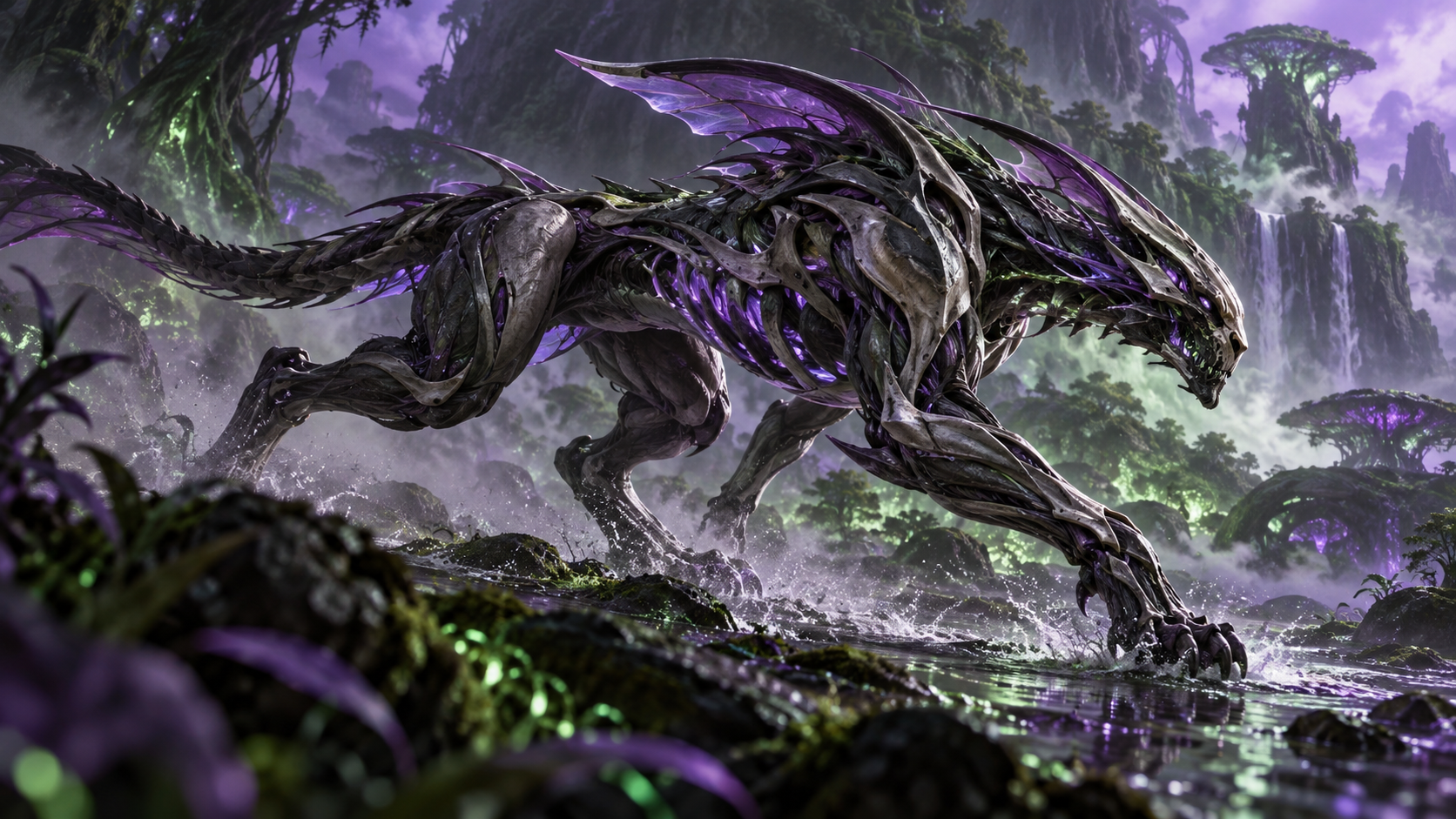
Creature and non-human movement is one of the most crucial elements in building believable fantasy, sci-fi, and stylized worlds. Whether it’s a dragon taking flight, a quadruped stalking prey, a giant mech deploying its limbs, or an alien behaving in unexpected but biologically coherent ways, movement defines how players perceive the authenticity and threat level of non-human beings.
Unlike human characters, creatures must communicate intent, emotion, and physical rules through unfamiliar anatomy. Their animation must respect imagined biology, fictional physics, and the emotional tone of the game. This application focuses on creating movement systems that feel grounded, expressive, and consistent — even when dealing with forms that do not exist in the real world.
​
Mimic Gaming supports studios by shaping creature performance through a blend of creative design, biomechanical research, hybrid animation techniques, and advanced motion workflows. The goal is to bring non-human characters to life with motion that feels both imaginative and credible.
IMPORTANCE IN GAME DEVELOPMENT
Biomechanical Believability
Non-human animations must reflect weight distribution, limb function, joint structure, and center of gravity in a way that feels internally consistent.
Threat & Personality Communication
Movement reveals whether a creature feels aggressive, timid, intelligent, chaotic, or majestic — shaping player expectations and emotional response.
Silhouette Behavior & Readability
Clarity in body shapes, wing spans, tails, and exaggerated features helps players recognize creature intentions at a glance.
Environmental Interaction Logic
Creatures must navigate terrain, obstacles, and world geometry in ways that make sense for their size, anatomy, and behavior type.
Attack & Defense Clarity
Combat-driven creatures need readable attack telegraphs, recoveries, and impact behaviors to support fair gameplay.
Locomotion Style Diversity
Quadrupeds, winged beings, insects, serpentine bodies, and fictional hybrids each require distinct movement vocabulary.
Emotional & Behavioral Variation
Creatures express emotion through posture, speed changes, vocalization timing, and small reactive motions that hint at instinct or intelligence.
Player-Driven Encounter Design
Creature movement must fit encounter pacing, danger level, escape behavior, and worldbuilding storytelling.
HOW MIMIC GAMING CONTRIBUTES?
Mimic Gaming enhances creature and non-human animation by merging performance capture principles with imaginative biomechanics, reference-based research, and procedural animation support. Our workflows aim to preserve the believability of fictional bodies while allowing creative freedom.

CREATURE-SPECIFIC MOTION RESEARCH & DESIGN
For realism-focused projects, we provide detailed scans, reference photography, and facial data capturing skin texture, bone structure, and micro-expression patterns. This supports accurate likeness creation and strengthens believability in close-up scenes.

HYBRID ANIMATION
TECHNIQUES
Stylized characters rely on expressive exaggeration. We help adapt real performances into stylized proportions, ensuring movement still feels grounded while matching the intended artistic tone.

BEHAVIOR & PERSONALITY MOVEMENT DEVELOPMENT
Our modeling workflows deliver clean edge flow for deformation, especially around shoulders, hips, eyes, and the mouth. This ensures characters maintain visual clarity during expressive animations and complex body movements.

CUSTOM RIGGING COMPATIBILITY & MOTION PLANNING
We develop rigs tailored to each project’s needs — from advanced FACS-based photoreal systems to simplified stylized controllers. Each rig is built for emotional range, clean deformation, and consistency across scenes.

ATTACK, FLIGHT & TRAVERSAL DESIGN SESSIONS
We build movement libraries for combat actions, flight cycles, gliding, climbing, crawling, charging, and large-scale movements like stomps or impacts. Each motion is crafted to emphasize anatomy, weight, and danger level.

ENGINE-OPTIMIZED BLENDING & PROCEDURAL HOOKS
We prepare animation for real-time use — ensuring smooth transitions, predictable timing for telegraphs, compatibility with IK systems, and procedural add-ons such as physics-driven wings, antennae, or tails.
WHERE THIS IS USED IN THE PIPELINE?
Creature animation contributes to worldbuilding, encounter design, AI behavior, and late-stage polish. Every phase uses these motions to ensure creatures feel grounded and believable.
Pre-Production
-
Defining anatomical rules, movement vocabulary, and creature type
​
-
Building reference boards inspired by animals, machines, or hybrids
​
-
Testing silhouette readability and locomotion prototypes
​
-
Establishing tonal direction for each creature’s behavior
​
-
Aligning design, animation, and gameplay teams on creature roles
Production
-
Capturing and crafting movement through hybrid mocap/keyframe methods
​
-
Building attack sets, traversal cycles, idle variations, and reaction loops
​
-
Developing emotional and behavioral libraries for creature personality
​
-
Creating unique motion for special abilities (charge, roar, flight, stealth)
​
-
Maintaining consistent behavior across species, variants, or boss forms
Gameplay Integration
-
Implementing animations into behavior trees, AI logic, and encounter flow
​
-
Ensuring readability for attack wind-ups, movement patterns, and reactions
​
-
Aligning animation with physical collision, impact force, and navigation
​
-
Supporting procedural systems for wings, extra limbs, or secondary appendages
​
-
Adjusting timing for balance, difficulty, and encounter fairness
Post Production
-
Refining weight, timing, and motion exaggeration for the final creature feel
​
-
Smoothing transitions between locomotion, combat, and idle states
​
-
Adding secondary motion to tails, wings, and flexible anatomy
​
-
Enhancing emotional beats for companion creatures or narrative creatures
​
-
Testing animation across full encounter scenarios and world environments
WHO BENEFITS FROM IT?
Animation teams, AI designers, level designers, and encounter directors rely heavily on creature-specific motion. This section breaks down who directly benefits from creature animation workflows.
Animation Teams
Receive structured creature movement that blends creativity with biomechanical coherence.
AI Designers
Gain readable, behavior-driven animations for encounter logic.
Cinematic Directors
Benefit from expressive creature acting for narrative scenes.
Gameplay Designers
Get consistent attack, movement, and reaction timing for balanced fights.
Technical Animators
Work with rigs optimized for complex anatomy and procedural extensions.
Art Directors
Maintain stylistic consistency across realistic, stylized, or hybrid creature designs.
SUMMARY
Creature and non-human animation allows players to experience worlds filled with imagination, danger, wonder, and life. When creatures move with credibility — even within the impossible — they elevate immersion and strengthen emotional attachment. Their movement anchors game fantasy in physical reality, making each encounter feel epic, memorable, and meaningful.
​
Mimic Gaming brings creature motion to life through research-based biomechanics, hybrid animation workflows, unique personality design, and engine-optimized structure. From gentle companions to towering bosses, each creature becomes a believable member of the world’s ecosystem.
By blending artistic creativity with technical precision, Mimic Gaming helps studios create creatures that feel unforgettable.
.png)