
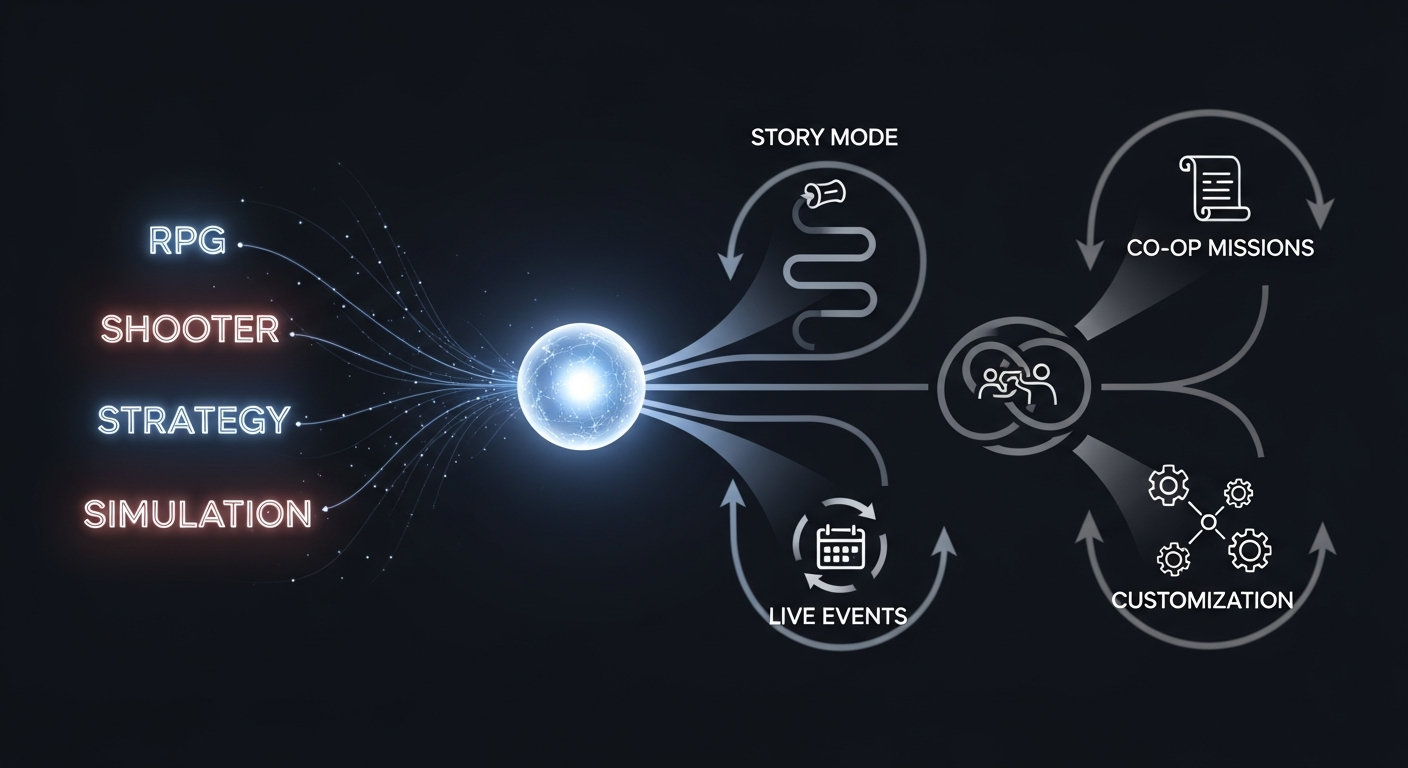
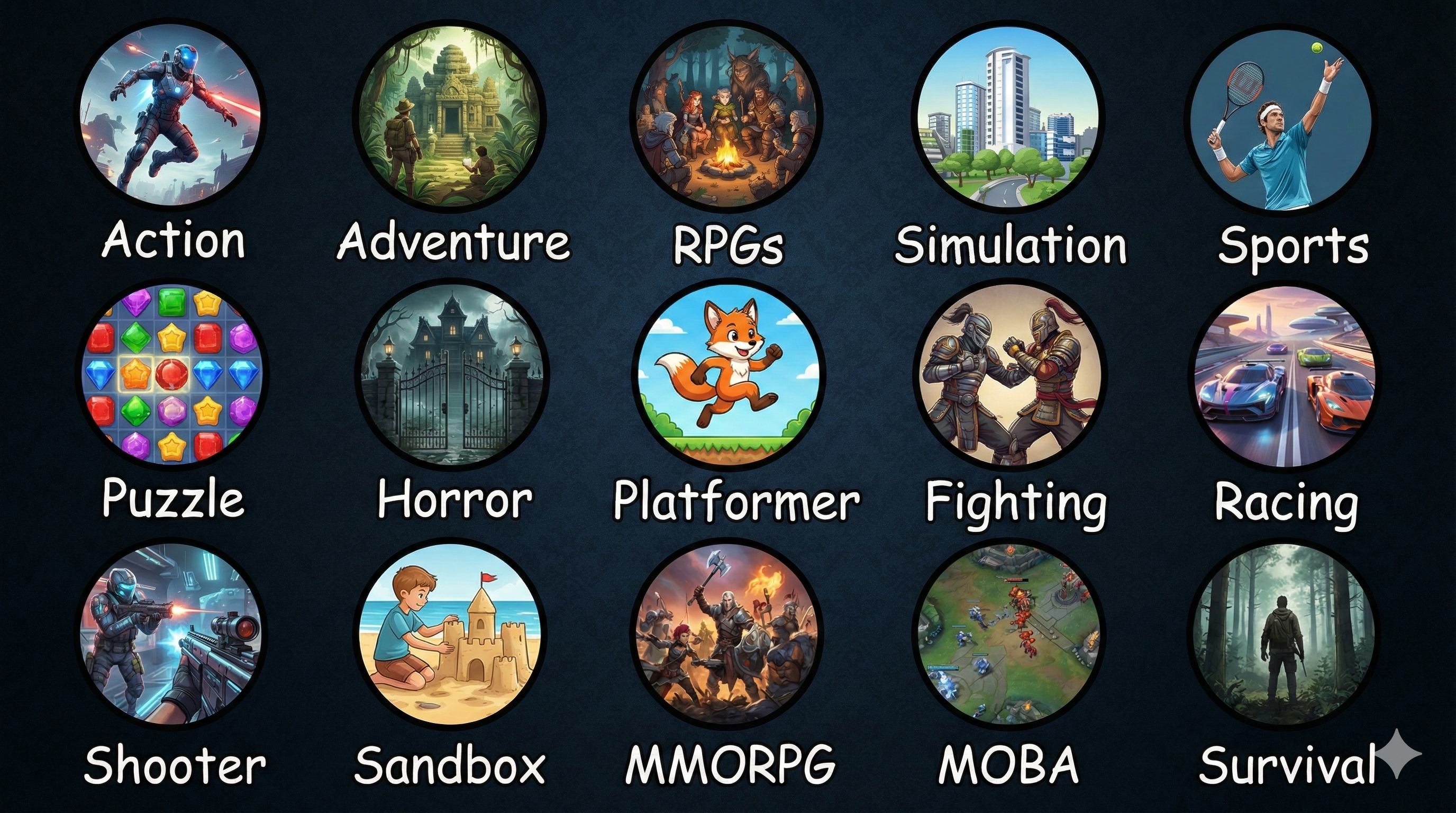
For most of the industry, “genre” used to be enough. You shipped an RPG, a shooter, a platformer. Retail shelves and early storefront menus were built around those buckets, and production teams could roughly infer scope from the label.
By 2026, that model breaks more often than it works. Games are hybrid by design, updated continuously, and experienced in wildly different ways depending on player intent, device, and session length. Platform discovery is now less about a single genre and more about a stack of traits that describe what the player will actually do minute to minute.
From a studio perspective, this shift changes how you pitch, how you build, and how you package content for stores and subscriptions. It also reshapes the craft details that matter, like animation coverage, interaction density, and how cleanly assets integrate into real time engines. This is where a production partner with deep pipeline fluency helps. Our work across mocap, scanning, animation systems, and engine delivery lives in the practical reality of modern classification and discovery, not the marketing label. You can see how we frame that tech foundation on our page.
Table of Contents
Why have traditional genres stopped describing modern play?
The simplest reason is overlap. Players can spend the same evening doing story missions, running a seasonal event, tuning builds, decorating a base, and dipping into co-op. One genre label cannot carry all of that.
What matters more in 2026 is the player loop, not the box art promise.
Loop clarity: Storefronts and subscription libraries need to answer “What do I do first?” faster than “What genre is this?”
Mode stacking: A single title can be a narrative campaign, a competitive arena, and a creator platform depending on when you join.
Session reality: A 12-minute mobile session and a 3-hour console session may be the same game, just different entry points.
Feature signaling: Tags like co-op, crossplay, accessibility options, or creator tools often predict satisfaction better than “action-adventure.”
Evolving content: Live service cadence means the game you launch is not the game players search for six seasons later.
Platforms are already reflecting this trend. Steam’s community tag system explicitly expands categorization into genres, themes, and attributes that help players browse beyond traditional labels.
How platforms classify games now?
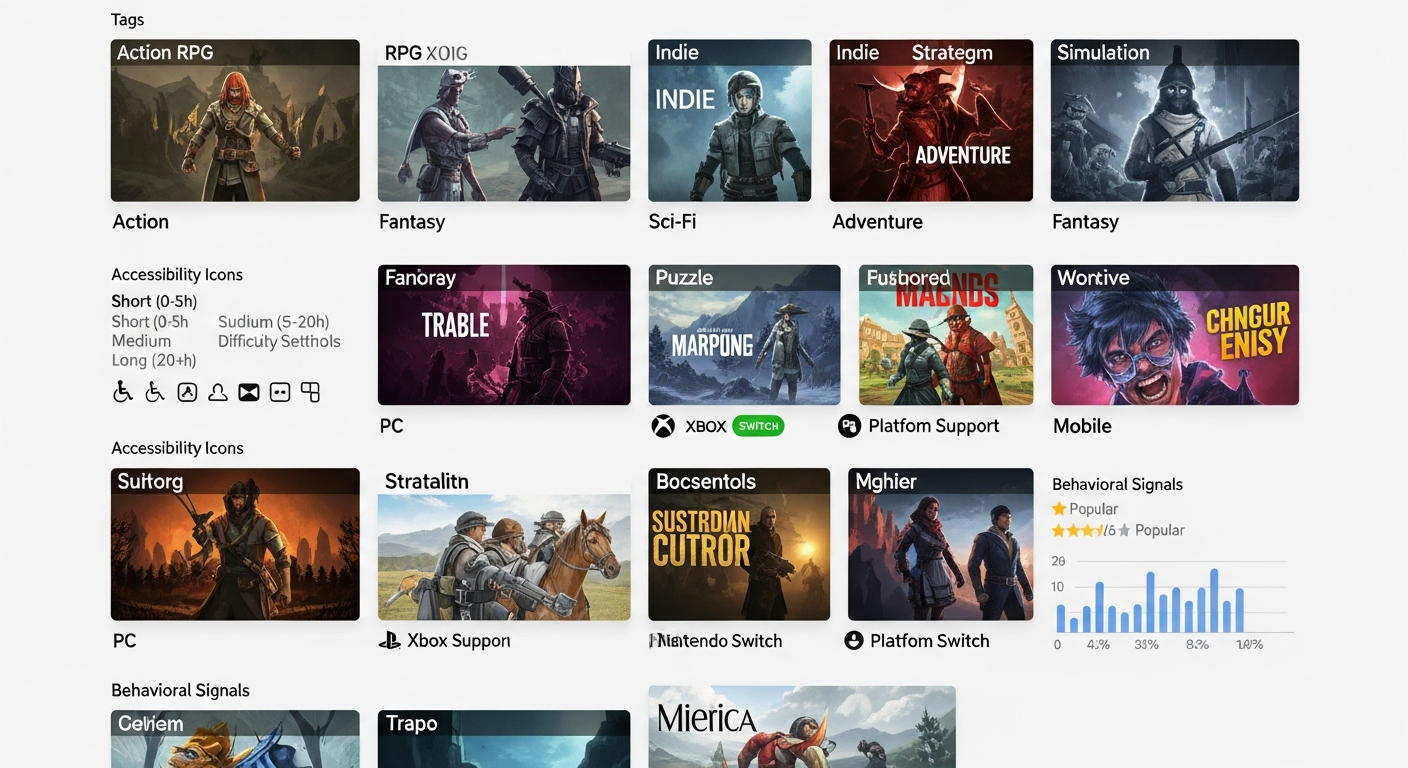
Platform taxonomy is no longer a neat tree. It is a matrix. Think “genre + mechanics + audience fit + platform constraints + behavioral signals.”
You can see the direction clearly in how platforms talk about discovery and personalization. PlayStation has leaned into feature-forward labeling with Accessibility Tags, which help players find games that match their preferences and needs, with “over 700 games” featuring those tags as of 2025.
Steam and Epic show the other axis, scale and algorithmic discovery. Steam tags provide the language layer, then recommendations interpret player behavior around that layer. Epic’s own reporting highlights the size of its ecosystem and the pressure to improve discovery across a huge user base.
Practically, modern categorization tends to combine:
Trait tags: Perspective, tone, pacing, difficulty, horror intensity, narrative density.
Mechanic tags: Deckbuilding, stealth, extraction, crafting, physics sandbox, rhythm timing.
Social and structure tags: Drop-in co-op, asymmetrical multiplayer, seasonal progression, UGC toolsets.
Device and access tags: Cloud play, controller-first, touch-friendly, VR support, accessibility feature sets.
Behavioral weighting: What similar players played next, what they refunded, what they finished, what they returned to weekly.
This is why category gaming in 2026 looks less like a shelf label and more like a living description. Even the debate around “Made with AI” disclosures shows how stores are experimenting with new metadata types, and how contested those labels can be.
Why are studios changing how they pitch and scope content?
Once discovery became tag and behavior driven, studios had to get sharper about what their game really is in production terms. This is not just marketing. It changes budgets and pipelines.
When you describe your game as “systemic stealth sandbox with social co-op,” you are committing to specific production realities:
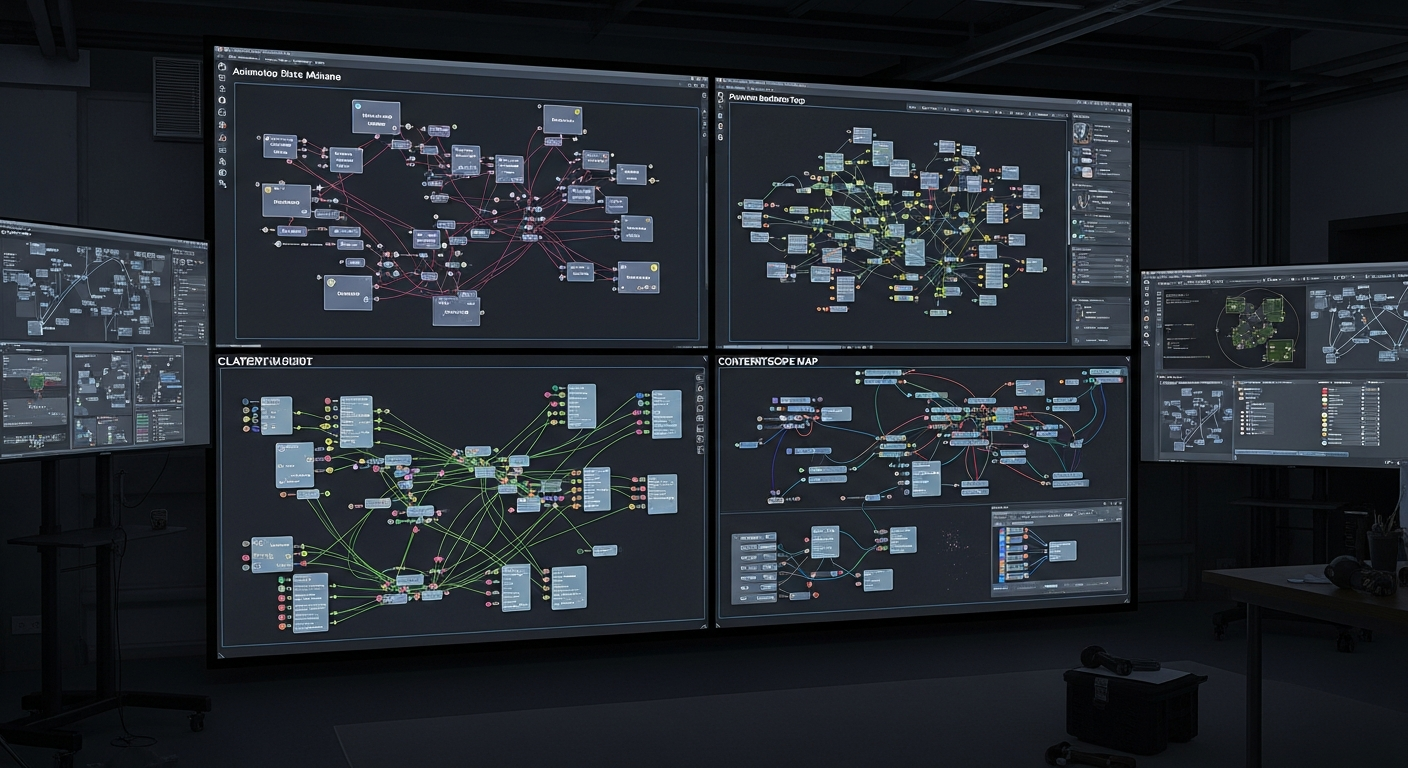
Animation coverage: Stealth, traversal, combat, and social emotes cannot share one generic movement set. You need authored transitions, state machine design, and motion blending that stays stable under player-driven input.
Performance capture strategy: A hybrid game may require both cinematic performance for narrative beats and reusable gameplay loops that hold up across hundreds of hours. That affects capture planning, take management, cleanup, retargeting, and naming conventions.
Asset scalability: If the experience includes UGC or modular content, you need consistent topology, LOD strategy, and shader discipline so new content drops do not break performance budgets.
Engine integration: The tags players filter by can imply technical expectations, like “responsive combat,” “realistic facial animation,” or “VR comfort.” Those expectations live or die in Unreal Engine, Unity, or proprietary integration, not in the store description.
Studios are also reacting to subscription catalogs and “what’s hot now” feeds. Players bounce between games faster, which means the first 10 minutes matter. Classification has to align with the actual onboarding loop, or you pay for it in retention.
Traditional vs modern classification models for game discovery
By 2026, the healthiest approach is not to abandon genres. It is to treat genre as one signal among many.
Classification models comparison: from genre labels to player intent stacks
Model | How it classifies | Strength | Where it fails | Production implication
Traditional genre | One primary genre (RPG, FPS, platformer) | Simple communication | Hybrid games become misleading | Scope gets under-specified early
Tag stack | Multiple tags across mechanics, tone, modes | More accurate discovery | Tag sprawl, inconsistent definitions | Requires clear feature ownership
Behavior-driven | Player similarity, session patterns, follow-on choices | Personalized relevance | Harder to control messaging | Onboarding and retention are critical
Systems-first | Focus on verbs and interactions (build, sneak, trade, create) | Aligns with design reality | Needs careful explanation to players | Animation, UI, and tools become core
Feature-forward | Accessibility, co-op, crossplay, device support | High trust, high clarity | Requires strict implementation | QA and compliance become visible
This is the practical heart of category gaming today. Players do not just shop for “an RPG.” They shop for “co-op progression with readable combat, good onboarding, and the right vibe.”
Applications In Production
When teams accept that classification is trait-based, they can build pipelines that support it cleanly, rather than forcing the game into a legacy genre box. Our broader hub is a good map of where these needs show up across production.
Capture design: Split sessions for cinematic dialogue versus systemic gameplay loops, then align cleanup, retargeting, and take naming to engine-ready deliverables.
Expression coverage: Build facial capture that supports both authored cutscenes and repeatable conversation states, especially when branching dialogue or reactive barks drive the “narrative” tag.
Real-time optimization: Use 3D scanning for faces, costumes, and props, then enforce LODs and material constraints so “photoreal” does not become “frame-time risk.”
State machine stability: Author transitions, interrupts, and locomotion variants that survive unpredictable player behavior, because hybrid tags imply hybrid inputs.
Shader discipline: Standardize shader features and tool automation so seasonal drops and UGC-like updates do not fracture rendering consistency.
Comfort constraints: If the experience is tagged VR or XR, bake performance budgets, interaction clarity, and locomotion comfort into assets and animation from day one.
Benefits
A modern taxonomy approach sounds abstract until you feel the production upside. In 2026, better classification is a pipeline multiplier.
Expectation match: Players discover the game for the right reasons, which protects retention and reviews.
Scope truth: Teams budget animation, VFX, and systems against actual verbs and modes, not a vague genre promise.
Content scaling: Live service updates land smoothly because the tag stack maps to modular deliverables.
Cross-team language: Design, art, animation, and publishing share a more precise vocabulary for what’s being built.
Engine readiness: Real-time integration targets are clearer when the “feel” tags are treated as technical requirements.
This is why platforms continue to push richer metadata. Even Netflix, approaching games as part of a subscription ecosystem, presents its catalog as a curated library where frictionless discovery is the product, not just the titles themselves.
Considerations For Production Teams
The shift is real, but it has traps. Teams that succeed in category gaming evolution treat taxonomy like a design tool, not a storefront chore.
Ownership: Tag governance: Decide who owns the tag stack internally, and review it at each milestone as features evolve.
Proof: Demo fidelity: If you claim systemic combat or expressive narrative, your vertical slice must demonstrate it with final-quality animation and interaction polish.
Consistency: Asset rules: Lock naming conventions, skeleton standards, LOD targets, and shader features early so content remains compatible across seasons.
Instrumentation: Behavior signals: Build analytics around player intent, not just completion. Players who “decorate and socialize” behave differently than players who “min-max and grind.”
Accessibility: Feature integrity: If you surface accessibility options as discovery tags, they must be robust, tested, and maintained as content updates ship.
Localization: Tone accuracy: Tags like cozy, horror, or comedy live in presentation. UI, audio, and facial nuance need localization-aware review, not just text pass.
Future Outlook
By 2026, classification will keep drifting toward models that understand intent, not just content. Expect three accelerators.
First, AI-driven discovery gets more granular. It will look at your mechanics, your pacing, and player behavior patterns, then place you into micro-categories that change by region, device, and social context. Second, conversational and reactive characters reshape what “narrative” means. When dialogue is dynamic, the line between story game and systemic game blurs fast. Third, XR and spatial interaction continue pushing new experience labels that are closer to performance budgets and comfort constraints than to classic genres.
If you are building toward that future, the best investment is a pipeline that supports variability. Clean mocap and facial workflows. Animation systems built for interrupts and blending. Scan-to-asset processes that preserve fidelity while staying real time friendly. Technical art tooling that enforces standards at scale. And characters that can react believably when systems, not scripts, drive the moment. That is the foundation behind our work, where classification shifts from “what the game is called” to “how the world responds.”
Conclusion
Traditional genres are not dead, but they are no longer the center of the map. Platforms are optimizing for discovery speed and satisfaction, which means tags, traits, and player intent now carry more weight than a single label. Studios are responding because it affects everything, from how you scope animation to how you ship live updates without breaking performance or tone.
In the category gaming for 2026, the practical win is alignment. When classification reflects real gameplay loops, you build the right content, capture the right performances, and deliver the right level of engine-ready polish. That is how you earn trust from both algorithms and players, without chasing trends or forcing a game into yesterday’s box.
FAQs
What does category gaming mean in 2026?
It refers to a shift from single-genre labels toward multi-signal classification, including mechanics, modes, accessibility features, device fit, and player behavior patterns.
Why are platforms moving away from traditional genres?
Because hybrid games are common, live service updates change the experience over time, and storefront algorithms need more precise signals than “RPG” or “action.” Steam’s tag system is a clear example of this direction.
How do accessibility tags influence game discovery?
They let players filter based on supported features and preferences, which improves satisfaction and reduces mismatch. PlayStation reports over 700 games using Accessibility Tags as of 2025.
How should studios decide which categories and tags to lean into?
Start with the core verbs and loops. Then map tags to features you can prove in a build. If you cannot demonstrate the promise in onboarding and the first session, avoid positioning around it.
Does better classification change how animation is produced?
Yes. Tag stacks often imply multiple interaction modes. That usually increases the need for state machines, motion blending, interrupt coverage, and separate solutions for cinematic performance versus gameplay loops.
Where do motion capture and facial capture fit into this shift?
They become “experience-defining” signals. If your discovery positioning leans on narrative, character depth, or realism, facial nuance and body performance must hold up under close camera work and repeated play.
How do live service updates complicate game categorization?
Your tag stack can become outdated as new modes, weapons, events, or creator tools arrive. Treat classification as a maintained asset, with review gates tied to content drops.
Will AI change how games are categorized?
Yes. Stores are already experimenting with AI-related disclosures and metadata, and recommendation systems will increasingly infer categories from player behavior and content traits.
 December 30, 2025
 November 17, 2025
 November 23, 2025