
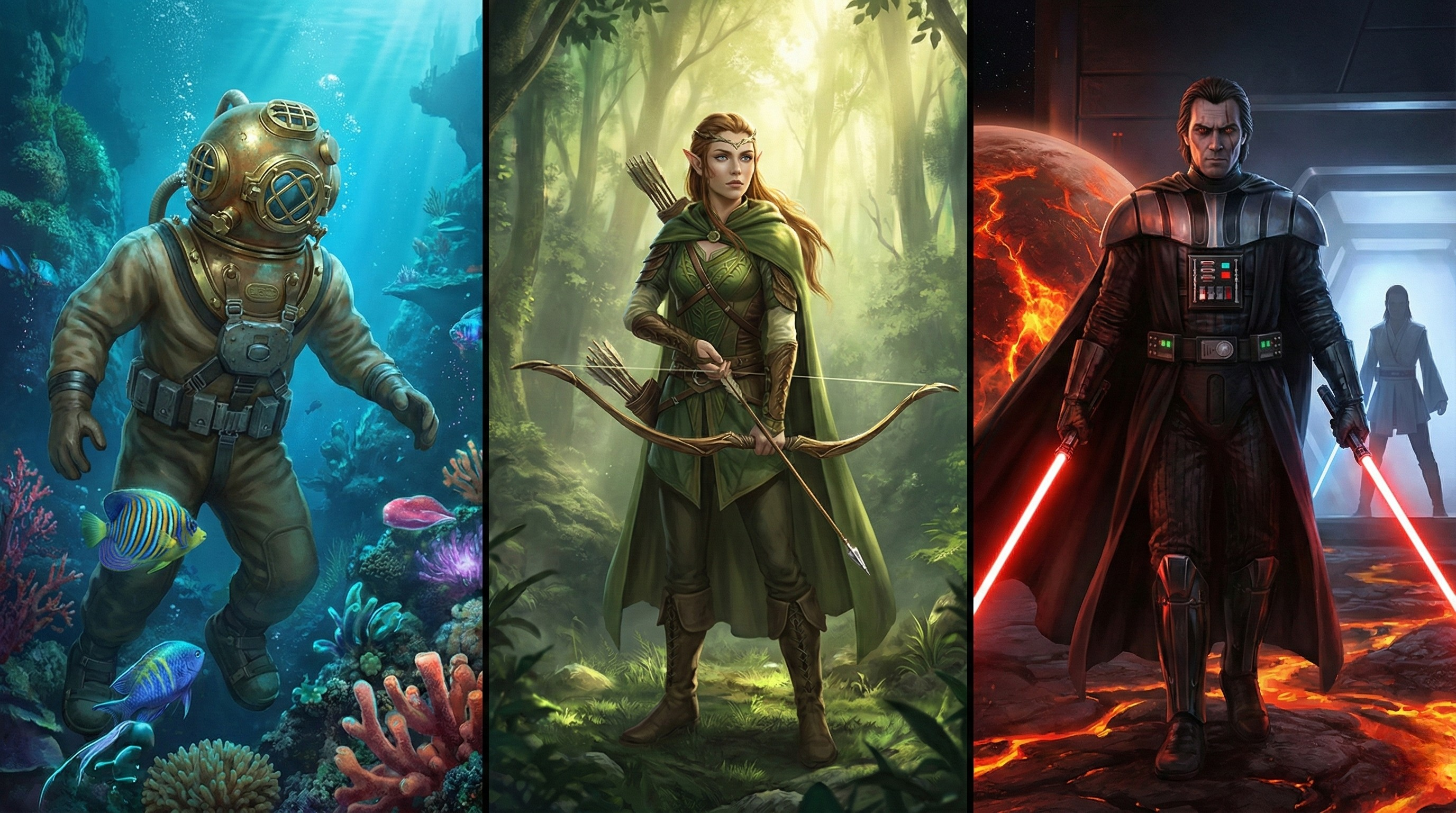
When people talk about the best story games, they usually describe feelings. The quiet pause before a choice. A line of dialogue that lands because the camera held half a second longer. A level that steers you without you noticing. None of that is accidental. Story in games is engineered, staged, and shipped through a pipeline that has to survive budgets, tools, and production reality.
The strongest narrative games succeed because writing, level design, animation, and cinematics share the same intent. They solve the same problem from different angles. The writer defines meaning. The level designer builds the player’s path through that meaning. The cinematic team frames the emotion. Then, gameplay systems keep it all coherent when the player does something unexpected.
At Mimic Gaming, this kind of cross-discipline alignment is where production either stays clean or starts to unravel. Our game development services sit at that intersection, where performance, animation, and engine integration have to land in a playable build, not a pitch deck.
Table of Contents
What Makes Story Land In Games?
Great game stories are not just well-written. They are well delivered.
Coherence: The player understands what they are doing, why they are doing it, and what changed because they did it.
Momentum: Story beats arrive on a rhythm that respects input, traversal, and failure states.
Specificity: Characters speak like they live in this world. Props, signage, and animation support that tone.
Consequences: Even small choices create different reactions, relationships, or routes.
Performance: The face, body, and camera language match the line. If the acting is off, the writing takes the blame.
This is why the best story games feel expensive even when they are not. They spend production effort in the places the player can feel. Timing, staging, and readable intent usually beat raw dialogue volume.
Writing For Interactivity
Game writing is design work. A script is only useful if it can be played, tested, and iterated.
Premise: A one-sentence promise that guides every mission and scene decision.
Bible: Character goals, voice rules, world logic, and “what never happens” constraints.
Beats: Scene objectives broken into playable steps, not just pages of dialogue.
Branches: Choice points are mapped with a rejoin strategy so production does not explode.
Barks: High-frequency lines that keep the world alive without blocking control.
A practical trick used on strong productions is to write “camera intent” and “player control intent” alongside dialogue. If the player must keep moving, the writing needs to be carried while traversal happens. If the moment must land emotionally, you budget for a lock-in, and you protect it with state handling.
Dialogue that works in-engine
Dialogue has to survive dynamic conditions: distance, interruptions, combat triggers, and streaming.
Triggers: When a line fires, what cancels it, and what must never overlap.
Fallbacks: Alternate takes for “player arrived early,” “player arrived late,” and “player failed.”
Locality: Lines written with spatial context so they still make sense if the player looks away.
Continuity: Pronouns, names, and references that respect branching outcomes.
This is a big reason the best story games tend to have tight narrative design documentation. It is not bureaucracy. It is protection against edge cases.
Narrative Level Design And Player Flow
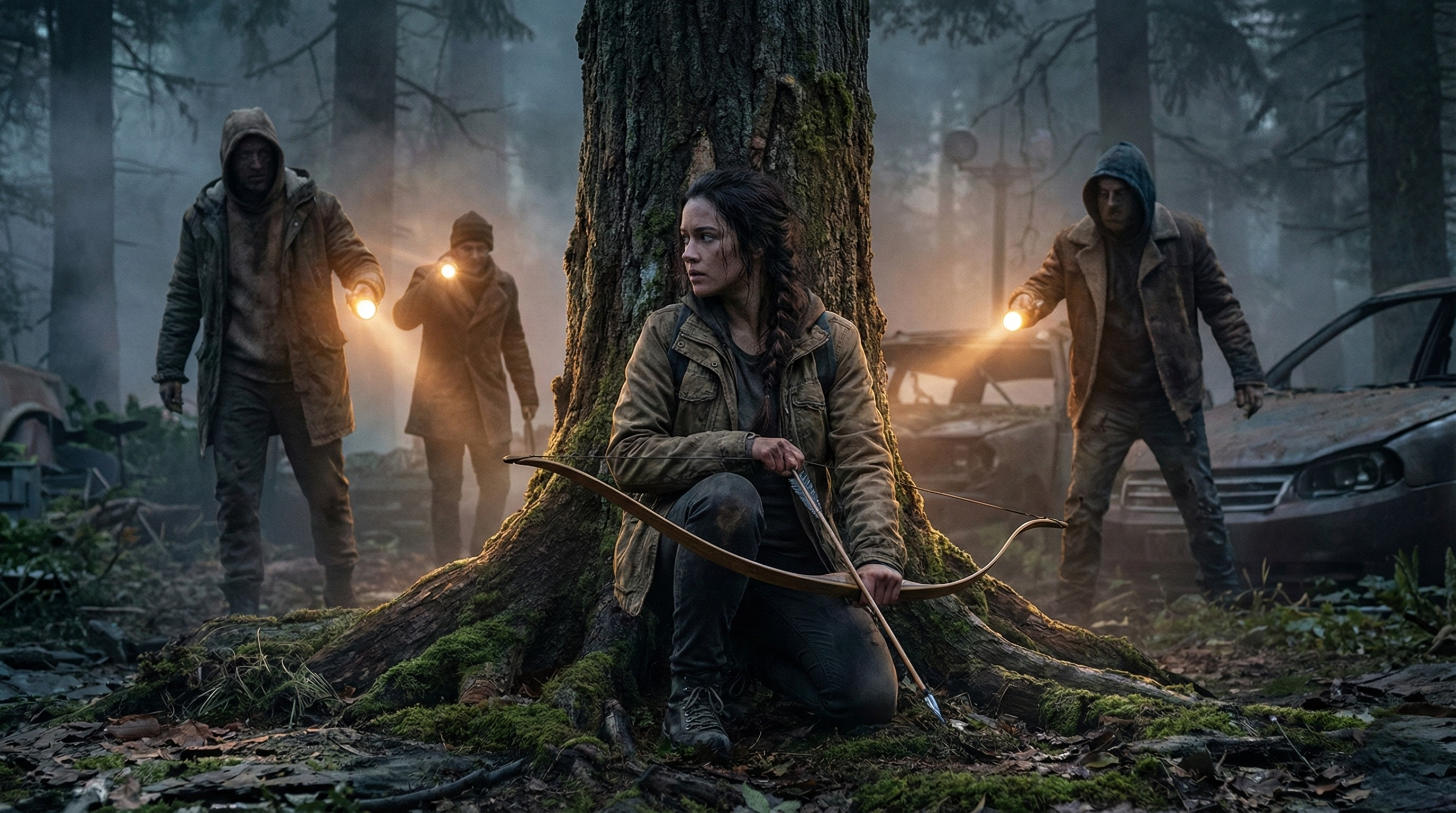
Level design is where narrative becomes physical. The player’s route is a sentence you make them read with their hands.
Critical path: The main route that delivers required beats, built to be readable in motion.
Story gates: Doors, traversal challenges, or social locks that justify pacing without feeling like a stop sign.
Reveal control: Sightlines and occlusion that decide when the player learns something.
Safe rooms: Spaces that let dialogue breathe and let the player reset mentally.
Echo paths: Optional routes that deepen the theme through environmental storytelling, not exposition.
Good narrative levels also consider failure and repetition. If a player dies three times, they might hear the same line three times. So the level and audio design need variance, or smart suppression, or a system that escalates rather than repeats.
Environmental storytelling that does not feel like set dressing
The most effective environmental narrative is interactive or consequential.
Ownership: Props and wear patterns that tell you who lives here and what they value.
Cause and effect: Damage, repairs, and changes that reflect events the player influenced.
Readable factions: Silhouettes, color logic, and signage that communicate “who controls this space.”
Functional layout: Rooms that make sense for the world, not just for combat metrics.
This is where 3D scanning and asset pipelines matter. Scan-based detail can sell authenticity fast, but it still needs optimization, LOD strategy, and material discipline so it survives real-time performance budgets.
Cinematics That Survive Gameplay Constraints
Cinematics are not separate from gameplay anymore. Many of the most memorable moments in the best story games are in-engine, built to run on the same rigs and shaders as play.
Performance capture and animation pipeline
To make acting land, you need a clean handoff from stage to engine.
Capture session: Blocking for readability, lens intent, and actor spacing that matches the set.
Take management: Slate discipline and metadata so editors can find the right emotional read fast.
Cleanup: Noise removal and contact fixes that preserve weight without “float.”
Retargeting: Matching skeletons, preserving shoulder and hip truth, preventing foot drift.
Curve polish: Micro-timing adjustments that sell thought, hesitation, and reaction.
Naming conventions: Consistent clip IDs so gameplay, cinematic, and audio teams stay synced.
Facial capture is where audiences are most sensitive. A believable blink pattern and subtle eye focus often matter more than high-frequency lip detail. And if you are building dialogue scenes, you also need rigs and blendshape sets that play nicely with real-time lighting, compression, and LODs.
Camera, editing, and staging in a playable world
Cinematics succeed when they respect what the player already knows.
Blocking: Characters face the emotional target, not just the camera.
Shot logic: Cuts follow attention, not coverage for coverage’s sake.
Hand-offs: Entering and exiting gameplay without popping pose, orientation, or locomotion state.
Interrupt safety: If the player skips or is forced out, the narrative state still resolves correctly.
When teams get this right, the game can move between play and story without the player feeling the seams. That is a major ingredient behind the best story games feeling “premium.”
Narrative Workflows Compared: Linear, Hub, And Open World
Workflow style | What it’s best at | Common risk | Production technique that helps
Linear campaign | Strong pacing, tight emotion, authored reveals | Player agency feels limited | Build “micro agency” inside scenes: timing choices, dialogue selects, optional reads
Hub and spoke | Character depth, repeatable spaces, evolving relationships | Hub fatigue and repetition | Track hub state changes with visual progression and rotating interaction sets
Open world narrative | Discovery, systemic storytelling, player-led order | Narrative dilution and missed beats | Use layered story: main spine, regional arcs, ambient narrative, recap systems
Branching narrative | High replay value, ownership of outcomes | Combinatorial content explosion | Plan rejoin points, reuse staging sets, write modular scenes with shared goals
There is no single correct approach. The best story games choose a structure that matches the emotional promise, then build pipelines that can actually ship it.

Applications In Production
Story craft shows up everywhere in a real production, not just in cutscenes.
Dialogue scenes: Facial performance, eye lines, and body language tuned for close-up readability in-engine.
Playable narrative beats: Animation that supports interaction, like handing an item, opening a door, or reacting to player proximity.
Companion characters: A movement and reaction library so they feel present, not like a drone following a spline.
World storytelling: Characterful idles, ambient interactions, and contextual animations that sell culture.
Combat story moments: Transition systems that let a narrative beat trigger without breaking locomotion and aim states.
Performance delivery: Production-ready motion built through character performance and animation pipelines, so it lands both in cinematics and in gameplay loops.
Benefits
A clean story pipeline does more than improve writing. It protects the whole schedule.
Faster iteration: Beats can be tested in greybox with temp VO and placeholder cameras.
Stronger alignment: Writers and level designers share the same beat map and constraints.
Better reuse: Animation sets and staging rigs can serve multiple scenes without feeling copy-pasted.
Higher emotional hit rate: Performance and camera intent are planned, not guessed late.
More stable builds: Narrative state logic is designed early, not patched in at content lock.
This is why teams chasing the best story games outcomes invest in pipeline discipline. They are buying predictability, not just polish.
Considerations For Production Teams
Story-driven production tends to fail in familiar places. These are the ones worth watching early.
Scope control: Count scenes by setup complexity, not by page count. A two-person conversation can be cheap or brutally expensive.
State design: Track narrative flags with clear ownership. Decide who can set, clear, and query them.
Tooling: Give designers simple ways to preview dialogue timing, camera cuts, and skip logic in editor.
Performance budgets: Cinematic lighting and hair shading still need to run at target frame rate on shipping hardware.
Audio reality: VO scheduling, pickups, and localization need stable scripts earlier than most teams want to admit.
Data hygiene: Clip naming conventions, take IDs, and folder structure prevent chaos when the animation library scales.
If you want a team to ship scenes that feel effortless, you make the pipeline boring in the best way. Reliable. Searchable. Testable.
Future Outlook
The next wave of story craft is less about longer scripts and more about responsive characters.
Conversational NPCs are moving from novelty to production feature. The challenge is not generating words. The challenge is directing behavior, memory, and tone so the character stays inside the narrative rules. That requires authoring frameworks, safety rails, and performance systems that can deliver believable reactions at runtime. Our work around AI-driven NPCs and digital companions fits here, where dialogue intelligence still has to be staged like a character, not a chatbot.
Real-time engines are also collapsing the wall between cinematics and play. That means more in-engine cutscenes, more shared rigs, and more reliance on technical art. Shaders, lighting rigs, and automation tools matter because they keep quality consistent across hundreds of shots and interactions.
XR will push this further. Spatial interaction and comfort constraints change how you pace story beats. The camera cannot do everything for you. Performance has to read at closer distances, with stricter frame timing. And because XR budgets are tight, optimization becomes part of narrative delivery, not a separate phase.
The teams that build the next best story games will be the ones who treat story as a system. Authored intent, supported by animation, tools, and integration that scale.
Conclusion
Story games earn their reputation in the details. Not just the twist, but the walk to the twist. Not just the dialogue, but the breath before it. Writing, level design, animation, and cinematics all carry the same emotional payload, and the pipeline decides whether it arrives intact.
If your goal is to build moments players remember, you need a production approach that respects both craft and constraints. That is where we work best at Mimic Gaming. We help teams turn narrative intent into engine-ready performance, clean integration, and scenes that hold up when the player takes control.
FAQs
What defines the best story games?
The best story games combine strong writing with delivery. That means pacing, performance, level flow, and systems that keep the story coherent when the player experiments.
How do writers and level designers work together on story-driven games?
They align on a beat map. Writers define objectives and tone. Level designers translate that into spatial pacing, reveals, and gates that feel motivated.
Why do some game stories feel disjointed even with good dialogue?
Because the delivery pipeline breaks. Missing state logic, repeated triggers, weak performance, or levels that fight pacing can undermine strong lines.
How are cinematic scenes built for real-time engines?
Teams block scenes in-engine, capture or animate performances, clean and retarget motion, then build camera cuts and hand-offs that respect gameplay states.
What is the role of motion capture in narrative games?
Mocap provides believable body language and timing. It is usually followed by cleanup, retargeting, curve polish, and facial work to fit the character rig and engine constraints.
Do open-world games make storytelling harder?
Yes, because players can reorder events. Successful open world narratives use layered arcs, rejoin points, and recap systems so key beats still land.
How do AI NPCs change storytelling?
They shift content from fixed dialogue trees to behavior and memory systems. The craft moves toward directing tone, constraints, and performance rules.
 November 18, 2025
 November 17, 2025
 July 16, 2026