

AR gaming has shifted from a novelty to a major force in the interactive entertainment industry. Games that blend digital content with the real world now demand advanced rendering, camera tracking, spatial mapping, and intelligent AI systems—all running seamlessly on mobile or wearable devices. Players expect AR games to place characters on their desks, creatures in their streets, jungles in their living rooms, and experiences that react perfectly to their environment.
But bringing AR to life is far more complex than placing a 3D model on a camera feed. Developers must solve problems involving real-time physics, lighting, occlusion, depth sensing, optimization, user comfort, and device limitations. And as AR gaming rises—something highlighted in how AR gaming is growing fast, the challenges grow alongside it.
This guide explores the biggest technical challenges AR developers face today, and why building high-quality AR games requires deep expertise in both software and spatial design.
1. Precision Tracking & Spatial Mapping
The foundation of any AR game is accurate tracking of:
device position
camera orientation
surface recognition
object location
user movement
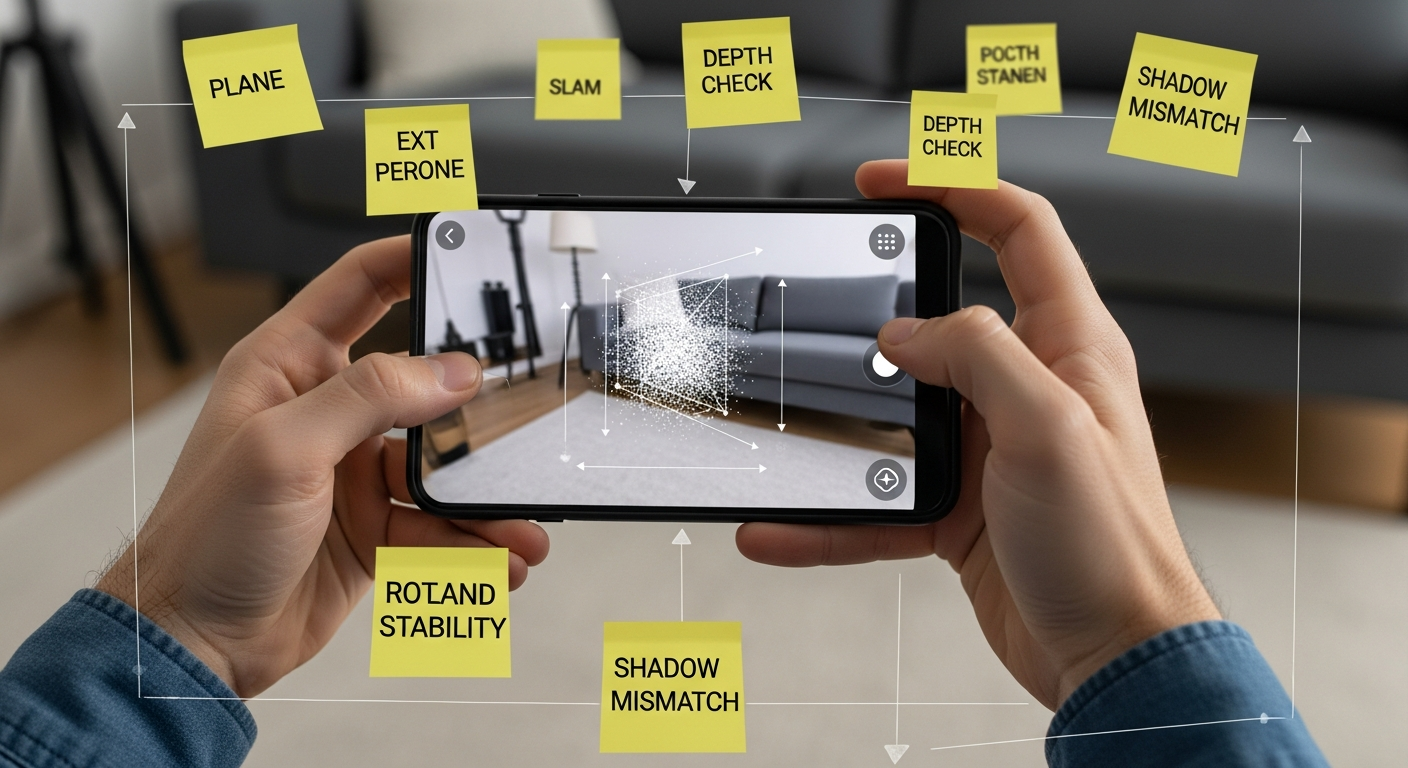
Players get frustrated instantly when objects float incorrectly, jitter, or drift.To achieve believable integration, AR engines must:
detect planes (floors, tables, walls)
understand depth
track motion in real time
maintain stable anchors
Mobile sensors, gyroscopes, SLAM algorithms, and camera pipelines all need to work together seamlessly.
Why it’s challenging:
Poor lighting can break tracking
Complex rooms confuse spatial detection
Fast movement creates jitter
Shadows and reflections throw off depth
Tracking is the backbone of AR—and it’s the hardest thing to perfect.
2. Realistic Integration of 3D Objects Into the Real World
AR objects must feel like they belong physically in the player’s environment.This requires:
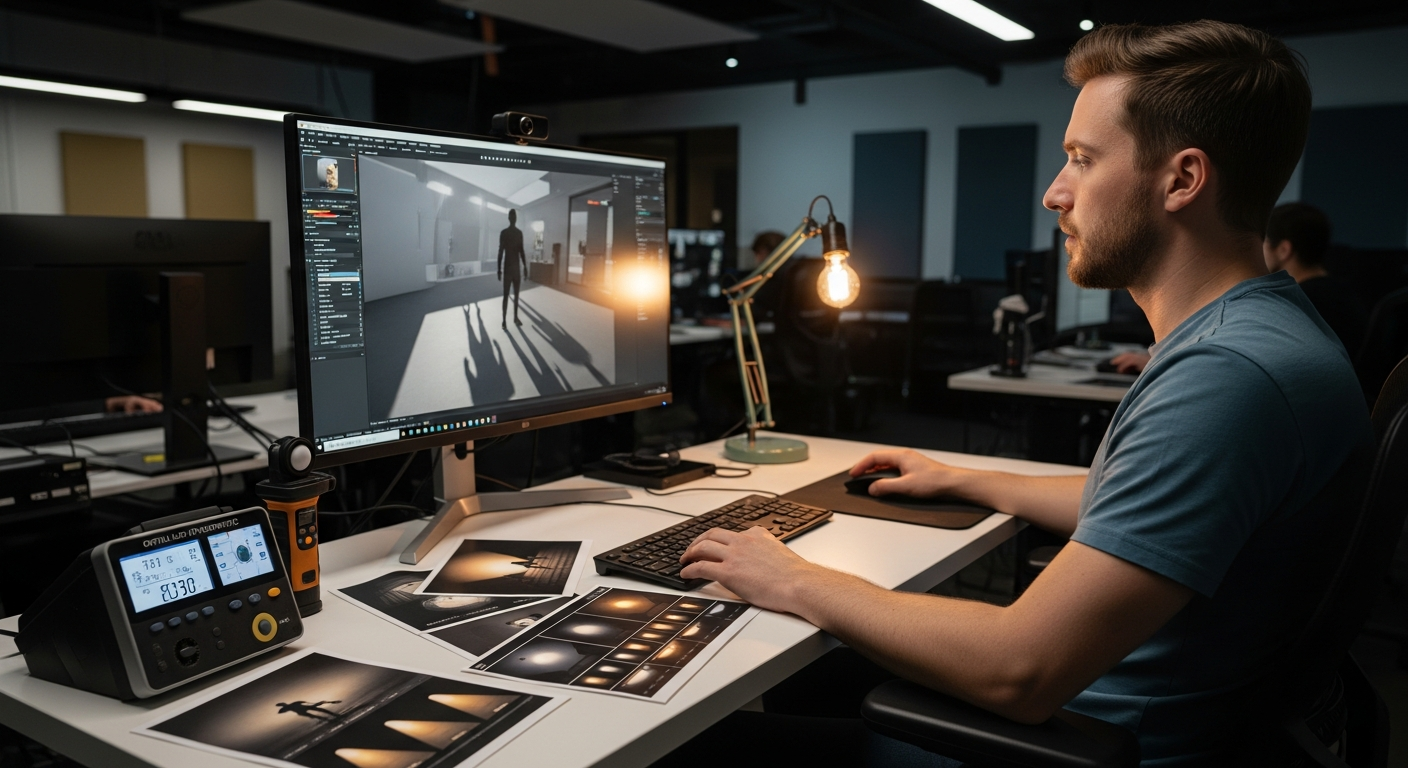
believable lighting
occlusion accuracy
shadow placement
scale consistency
collision interaction
Games often struggle when:
characters appear “glued” to the floor
shadows don’t match room lighting
objects intersect incorrectly with real surfaces
Many of these challenges overlap with worldbuilding, terrain, and lighting principles found in why game environment design matters in modern games —except AR adds the complexity of unpredictable, real-world conditions.
3. Real-Time Lighting & Rendering on Mobile Devices
AR depends heavily on lighting and shading to blend the digital with the physical.But unlike console or PC games, AR experiences must run:
on mobile GPUs
with limited battery
without overheating
at high framerates
in constantly changing lighting conditions
Rendering systems must adapt instantly to:
sunlight
indoor lamps
reflections
shadows
color temperature
Modern rendering innovations help dramatically, similar to the advances described in the evolution of real-time rendering for next-gen visuals, but AR adds constraints that make every lighting calculation more intense.
4. Performance Optimization (The Constant Battle)
AR games require:
camera streaming
SLAM processing
physics simulation
real-time rendering
AI behavior
networking
audio spatialization
All at once.
Developers must optimize for:
battery life
heat dissipation
device variation
mobile GPU limitations
frame stability
Even small memory leaks or heavy shaders can break the experience.
Mobile AR is the toughest mix:
High-end rendering + real-time camera + sensor fusion + AI→ all compress into a thin device.
5. Physics & Collision With Real-World Geometry
AR objects should:
land on surfaces
bounce, fall, collide
respond to gravity
interact with real spaces
But real-world geometry is unpredictable.
Problems include:
inaccurate depth maps
surfaces misdetected
floating characters
incorrect collision resolution
unrealistic object behavior
Bringing physical simulation into unpredictable real environments is drastically more complex than simulating game worlds built from scratch.
6. Building Meaningful Interaction With the Real World
To stand out, AR games must go beyond “placing objects on a table.”
Modern AR needs:
environment-aware puzzles
object recognition
real-world scanning
spatial navigation
physics-based challenges
mixed-reality combat
AR’s potential shines when digital and physical systems blend naturally—but the implementation is incredibly intricate.
7. AI Behavior Must Adapt to Real Spaces
AI enemies or companions need logic that changes based on the room layout.
For example:
hiding behind your sofa
flying around your kitchen ceiling
circling your backyard
avoiding household objects
AI must account for unpredictable obstacles, room shapes, and player movement.Advances in adaptive AI—similar to innovations seen in how AI in gaming is shaping the future of play—are helping developers build smarter AR behavior systems.
8. User Experience & Comfort in AR
AR games must avoid:
motion sickness
visual overload
eye strain
interface clutter
confusing interactions
Designers must guide players through intuitive gestures, natural UI prompts, and smooth camera behavior—all while ensuring comfort during movement-heavy gameplay.
9. Device Fragmentation & Platform Limitations
Developers must support:
multiple cameras
differing sensor quality
varied chipsets
inconsistent AR tracking capability
different OS-level AR frameworks
This fragmentation can turn building an AR title into a huge engineering challenge.
10. Mapping Large Spaces & Outdoor Play
Outdoor AR introduces:
wide lighting variance
unpredictable terrain
GPS drift
faster movement
multiplayer synchronization issues
weather interference
The engine must maintain spatial anchors across vast environments, which is significantly harder than small indoor spaces.
11. Multiplayer AR Synchronization
Players sharing the same AR experience requires:
identical spatial mapping
synchronized anchors
low-latency networking
precise positional updates
Any drift between players will instantly break immersion.
This is one of the biggest challenges still being solved across the industry.
12. Creating Worlds That Feel Custom to Each Player
Every player’s room, office, or street is different.Developers must treat the real world as part of level design itself.
This requires:
dynamic level generation
adaptive puzzles
environment-informed enemy AI
scalable difficulty
AR’s unpredictability becomes a design challenge and a creative opportunity.
The Future of AR Gaming: What’s Coming Next
Future breakthroughs will include:
AR cloud anchors shared across cities
smarter spatial AI
ray-traced AR lighting
lightweight wearable AR glasses
persistent mixed-reality worlds
full-body motion in AR
procedural environment adaptation
generative AI for instant content creation
AR’s future is incredibly bright — and complex.
Conclusion
AR gaming is one of the most technically demanding areas of game development. Developers must blend advanced real-time rendering, AI-driven spatial logic, physics simulation, world design, and optimized mobile engineering to create experiences that feel seamless and believable.
Challenges like tracking, lighting, physics, and performance push teams to innovate constantly. Yet these same challenges make AR such an exciting frontier—one where digital creativity merges with the physical world.
Mimic Gaming, with expertise in simulation workflows, rendering, AI-driven interaction systems, and environment design, helps studios build AR experiences that feel natural, polished, and unforgettable.
FAQs
1. Why is AR gaming harder to develop than traditional games?
Because AR must integrate digital content into unpredictable real-world environments in real time.
2. What is the biggest challenge in AR gaming?
Accurate tracking and spatial mapping.
3. Does lighting affect AR games?
Yes — inconsistent real-world lighting makes realistic rendering extremely difficult.
4. Why does AI matter for AR?
AI allows AR characters to react to room layout, obstacles, and player movement.
5. Are AR games GPU-heavy?
Very. They require rendering + camera processing + tracking all at once.
6. How does AR gaming improve immersion?
By blending digital objects with the player’s real environment using real-time simulation.
7. What devices run AR games?
Mobile phones, tablets, AR headsets, and soon lightweight AR glasses.
8. Will AR gaming become more common?
Yes — as mobile hardware improves and AI systems become smarter.
 November 18, 2025
 November 19, 2025
 December 7, 2025