

AI in gaming has moved far beyond simple enemy pathfinding or scripted decision-making. Today, AI is driving the creation of massive worlds, complex ecosystems, dynamic weather, adaptive NPCs, and emergent gameplay that evolves alongside the player. Nowhere is this more evident than in procedural world generation — a technology that uses algorithms and AI systems to create vast, unique, ever-changing environments.
Procedural worlds allow developers to build games that feel alive, unpredictable, and endlessly replayable. From biome generation and dungeon layouts to faction behavior and global ecosystems, procedural systems unlock a scale of content that would be impossible to handcraft manually. Combined with next-generation AI, these systems are defining the future of how games are built, played, and experienced.
This guide explores how procedural world technology will shape the next era of AI in gaming, and why this combination is transforming game development.
What Are Procedural Worlds?
Procedural worlds are environments generated algorithmically rather than manually built asset-by-asset. Instead of hand-placing every tree, cave, or city, developers create rules and systems that generate them dynamically.
Procedural worlds may include:
Terrain & biome generation
Cave, dungeon, or interior layouts
City layouts & architecture variations
Ecosystems with wildlife behavior
Weather and atmospheric systems
Resource distribution
Faction territory & social simulation
Procedural quests and storylines
When powered by AI, these systems become even more adaptive, reactive, and believable.
Procedural generation supports many of the dynamic behaviors explored in game simulation for crowds, weather, and dynamic environments.
How AI Enhances Procedural Worlds?
While procedural generation gives worlds scale, AI gives them intelligence.
1. AI Creates More Believable Ecosystems
Procedural worlds can generate forests, deserts, or tundra—but AI determines:
how animals behave
how factions grow
how ecosystems adapt
how danger and resources spread
how seasons affect the environment
AI simulation transforms static worlds into responsive worlds.
This mirrors how AI influences future trends described in how AI in gaming is shaping the future of play.
2. AI Makes NPCs More Dynamic in Procedural Worlds
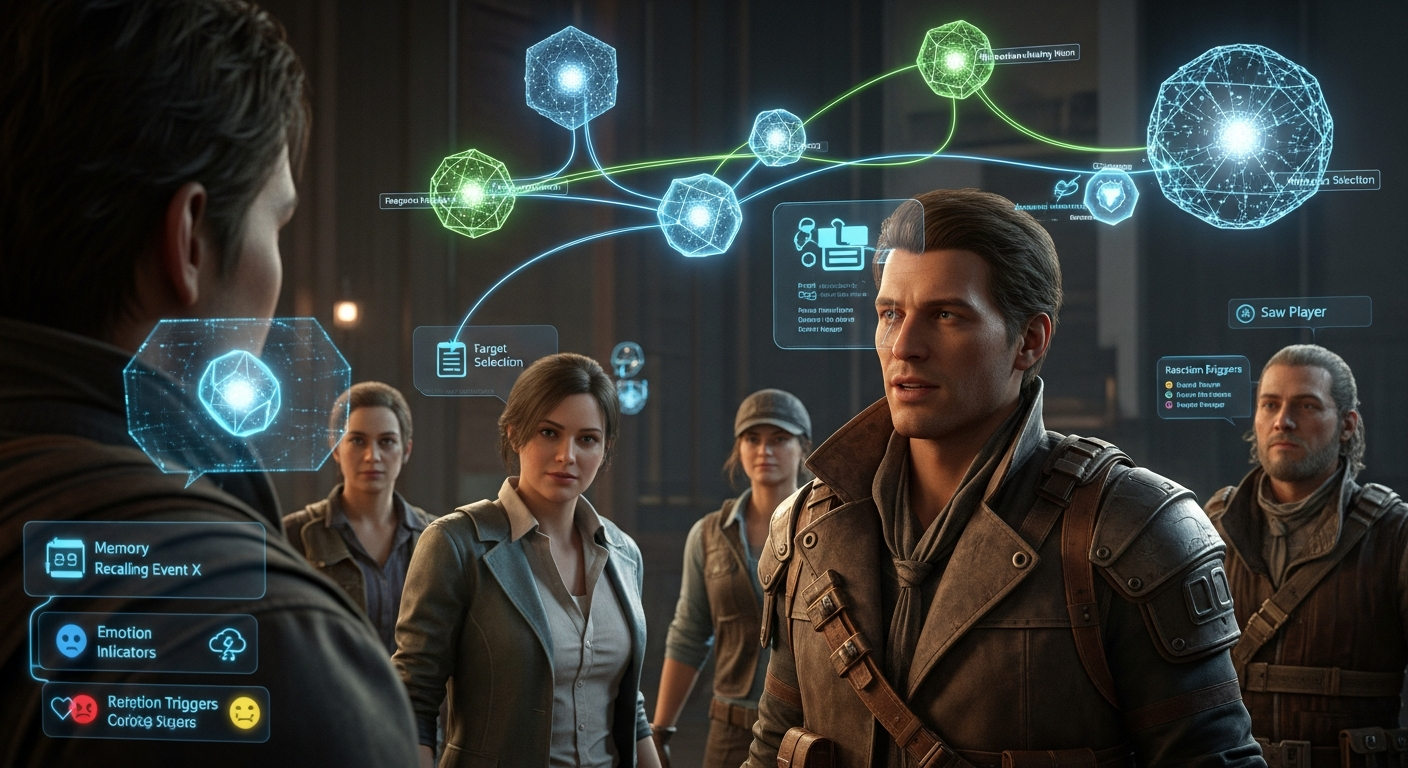
NPCs in open worlds can form schedules, factions, relationships, goals, and emotions.
AI enables NPCs to:
adapt to player behavior
remember past interactions
move dynamically based on world conditions
make autonomous decisions
generate quests based on needs or conflicts
This extends the principles explored in how NPCs in video games make worlds feel real.
NPCs will no longer be background characters—they will be evolving participants in a living world.
3. AI-Driven Procedural Storytelling
Procedural worlds work best when stories adapt too.
AI will soon generate:
emergent quests
evolving character arcs
faction-driven storylines
dynamic world events
consequences that persist across playthroughs
Instead of scripted missions, players experience personalized narratives.
4. Smarter World Simulation with AI Systems
AI improves simulation in several ways:
AI controls:
weather patterns
city growth
environmental hazards
physics-based destruction
wildlife behavior
population movement
When AI-driven simulation and procedural generation merge, worlds behave like ecosystems — not levels.
This synergy enhances the environmental fidelity described in the evolution of real-time rendering for next-gen visuals.
5. Infinite Replayability Through AI Variation
Traditional open worlds rely on handcrafted content, which players consume over time.
AI procedural systems allow:
infinite world seeds
endlessly different layouts
evolving faction borders
shifting resource distribution
dynamic challenges
new emergent systems each playthrough
Players never have the same experience twice.
How Procedural Worlds Improve Player Experience?
Procedural worlds driven by AI reshape how players explore, strategize, and discover.
1. Exploration Feels Fresh Every Time
New terrain, new events, new enemy placements, new puzzles — infinite novelty.
2. Player Choice Truly Matters
Actions affect:
ecosystem stability
faction dominance
economy dynamics
danger zones
questlines
The world evolves around the player.
3. Gameplay Adapts to Expertise
AI difficulty systems adjust encounters based on:
playstyle
skill level
progression speed
No two players experience the same pacing.
4. Emotional Immersion Increases
Players bond with worlds that feel alive, reactive, and unpredictable.

Procedural Generation Across Games
Genres
RPGs
Massive worlds, dynamic quests, evolving factions.
Survival Games
Resource shifts, weather hazards, procedural biomes.
Roguelikes
Dungeon layouts that change every run.
Sandbox Games
Infinite terrain generation, creative freedom.
Open World Shooters
Dynamic objectives, evolving enemy territories.
Strategy Games
Procedurally generated maps and political systems.
Procedural and AI-driven content is becoming a universal design tool.
The Technology Behind AI Procedural Worlds
1. Machine Learning Models
Predict terrain, object placement, biomes, and difficulty curves.
2. Noise & Chaos Functions
Perlin, simplex, and fractal noise generate natural landscapes.
3. Cellular Automata
Used for caves, cities, weather systems, and terrain mutation.
4. L-Systems
Generate trees, foliage, and structural patterns.
5. AI Agents
Simulate population, faction logic, and NPC behavior.
6. Simulation Engines
Drive environmental physics, wildlife, and crowd behavior.
AI transforms these from random maps into coherent worlds.
Benefits of AI + Procedural Worlds for Studios
Reduced manual worldbuilding workload
Massive, scalable environments
More dynamic game systems
Faster prototyping
Higher replayability
Personalized player experiences
Better content longevity
Adaptive difficulty balancing
Evolving in-game economies and ecosystems
This combination is becoming essential for next-gen development.
Challenges of AI-Driven Procedural Worlds
Harder to debug unpredictable behavior
Difficult to maintain narrative consistency
Risk of repetitive patterns without variation tuning
Heavy CPU/GPU load if not optimized
Balancing player agency vs randomness
Studios rely on careful rule-setting to maintain cohesion and intent.
The Future of AI in Procedural Game Worlds
AI procedural generation is moving toward holistic world simulation.
Future innovations include:
Fully simulated planets
AI-driven world history & culture generation
NPCs with long-term memory and goals
Weather that shapes geography over time
Digital twin ecosystems
Procedural storytelling engines
Neural rendering for world creation
Generative AI terrain, assets & quests
The future of AI in gaming is not just smart enemies — it’s smart worlds.
Conclusion
AI and procedural generation are redefining what games can be. By merging intelligent systems with algorithmic worldbuilding, developers can create living worlds filled with dynamic exploration, unpredictable events, smarter NPCs, evolving cultures, and infinite replayability. These technologies shift gaming from static content to adaptable ecosystems, where every player’s journey feels unique.
With expertise in AI systems, environment design, mocap, animation, simulation, and rendering, Mimic Gaming supports studios building the next generation of procedural, AI-driven game worlds.
FAQs
1. What is AI’s role in procedural generation?
AI interprets patterns, controls ecosystems, drives NPC behavior, and personalizes worlds.
2. Do procedural worlds mean random worlds?
No—AI uses rules to create coherent, believable environments.
3. How does AI improve NPCs in procedural games?
NPCs adapt to player actions, remember events, and react dynamically.
4. Can procedural worlds support storytelling?
Yes—AI generates emergent quests, branching events, and evolving narratives.
5. Are procedural worlds infinite?
They can be, depending on the system’s design.
6. Is procedural content harder to predict?
Yes, but rule sets keep the world coherent and balanced.
7. Does AI make games more immersive?
Absolutely—AI creates more reactive, believable environments.
8. What genres benefit most from procedural worlds?
RPGs, survival games, roguelikes, open world shooters, strategy games, and sandboxes.
 November 17, 2025
 November 21, 2025
 November 19, 2025