
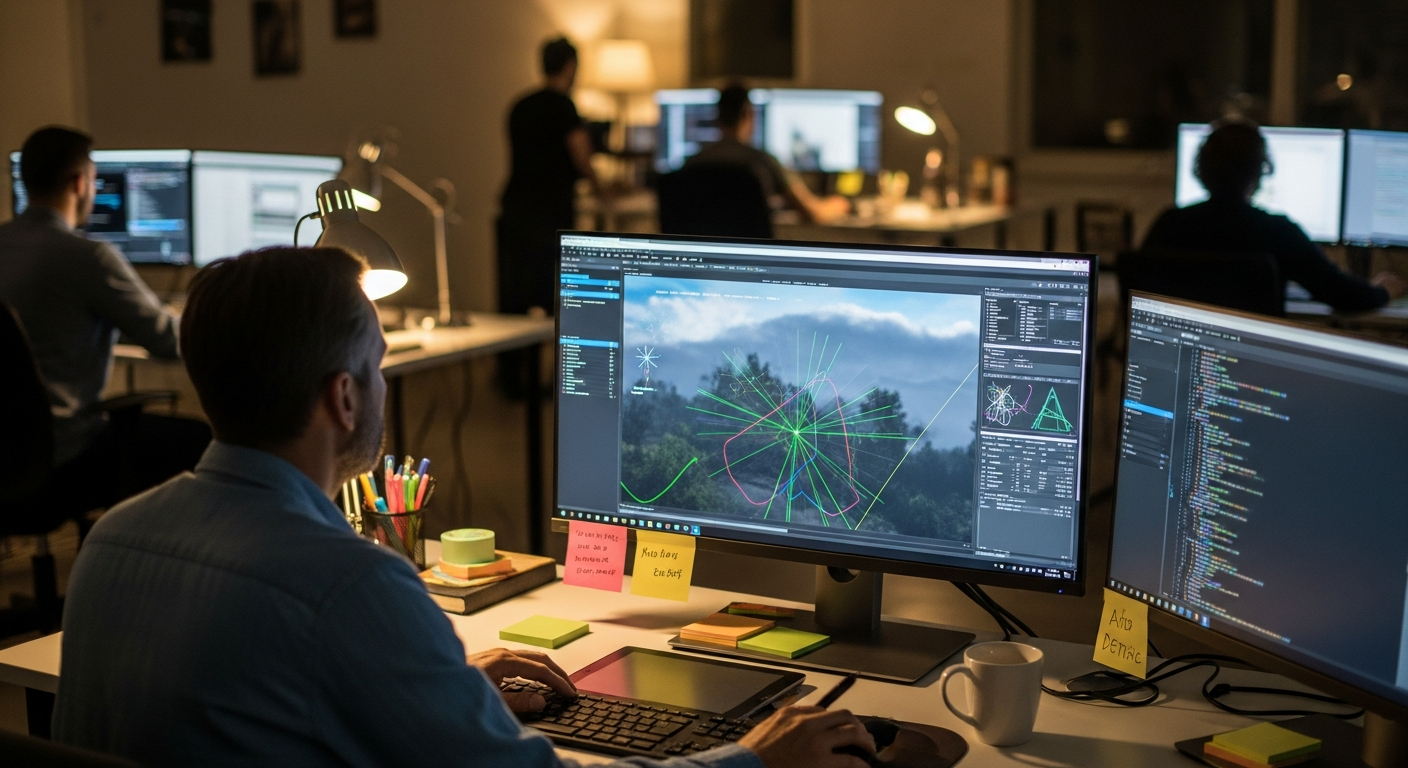
Game simulation has become one of the most transformative elements of modern video game design. It’s responsible for creating living environments that breathe, react, evolve, and respond to player actions. From bustling city crowds and realistic weather systems to destructible environments and emergent world behavior, simulation technology is now at the heart of next-generation gaming immersion.
Simulation makes worlds feel alive. It moves beyond static levels and scripted events, creating ecosystems where weather changes unpredictably, characters react naturally, and environments evolve over time. These dynamic systems dramatically increase immersion, emotional connection, and replayability. They help developers craft richer experiences that go far beyond visuals.
This guide explores what game simulation is, how it powers crowds, weather, and dynamic environments, and why it’s essential for the future of game development.
What Is Game Simulation?
Game simulation refers to the systems that allow a game world to behave realistically or believably—mimicking physics, weather, social behavior, crowd reactions, ecosystems, materials, and environmental changes.
Simulation includes:
Weather systems
Crowd AI
Physics simulation
Material behavior
Time of day cycles
Environmental reactivity
Dynamic audio
Ecosystem simulation
Fire, water, wind, and particle systems
Procedural world events
Simulation makes game worlds interactive systems, not just staged backdrops.
Why Game Simulation Matters?
1. It Makes Worlds Feel Alive
Static worlds can look good—but dynamic worlds feel good. Simulation creates motion, unpredictability, and texture.
2. It Enhances Immersion
When rain interacts with materials, crowds react to danger, or wind affects vegetation, players feel more present.
3. It Improves Gameplay Variety
Dynamic environments create:
emergent combat
dynamic puzzles
alternate paths
unpredictable encounters
Every session feels different.
4. It Strengthens Storytelling
Simulation-based events—crowd panic, environmental destruction, wildlife movement—add natural emotional weight.
5. It Supports Next-Gen Visual Fidelity
Game simulation works in tandem with modern rendering techniques explored in the evolution of real-time rendering for next-gen visuals.
Game Simulation for Crowds
Crowd simulation is key to creating believable cities, marketplaces, warzones, and hubs. This ties deeply into NPC behavior concepts explained in how NPCs in video games make worlds feel real.
Crowd simulation includes:
Pathfinding
Group behavior
Social reactions
Panic or flee responses
Density management
Environmental awareness
Animation blending
Role-based behavior
Examples of crowd features:
Citizens form natural walking patterns
Soldiers react cohesively to combat
Fans cheer, wave, and synchronize in stadiums
Crowds avoid collisions with players and obstacles
Mobs react dynamically to danger or events
In open-world games, crowd simulation dramatically improves world believability.
Game Simulation for Weather Systems
Weather is one of the most powerful tools for shaping mood, gameplay, and realism.
Weather systems simulate:
Rain, storms, snow, fog, sandstorms
Wind affecting trees, foliage, and particles
Water physics (rivers, flooding, waves)
Temperature effects (ice, overheating)
Lightning flashes affecting visibility
Weather impacts gameplay by:
Changing enemy detection ranges
Modifying weapon accuracy
Affecting traversal difficulty
Influencing NPC schedules
Altering wildlife behavior
Weather also transforms level navigation—echoing principles from why game environment design matters in modern games.
Game Simulation for Dynamic Environments
Dynamic environments evolve over time and react to the player.
Dynamic systems include:
Day-night cycles
Seasonal changes
Dynamic vegetation movement
Fire and smoke propagation
Destructible terrain
Procedural environmental hazards
Material wear and tear
Water levels rising or falling
Wind influencing projectiles
Footprints, mud, and surface deformation
Environmental reactivity enhances:
Stealth mechanics
Combat depth
Exploration paths
Survival gameplay
Environmental storytelling
Dynamic systems make every moment feel personal and unpredictable.
Key Technologies Powering Modern Game Simulation
1. Physics Engines
Simulate collision, gravity, fluids, cloth, hair, and destruction.
2. AI Systems
AI drives crowd behavior, world logic, and dynamic event creation—closely tied to advancements seen in how AI in gaming is shaping the future of play.
3. Particle & VFX Systems
Simulate fire, smoke, snow, sparks, water, debris, and more.
4. Procedural Systems
Generate forests, weather, rivers, and terrain in real time.
5. Real-Time Rendering
Lighting, shadows, and reflections adapt to simulated conditions.
6. Data-Driven Simulation
Machine learning enhances crowd control, physics prediction, and behavior systems.

How Game Simulation Shapes Player Experience?
1. Emotion & Atmosphere
Storms create tension.Snow softens tone.Sunset enhances cinematics.
2. Gameplay Strategy
Wind may influence sniping.Crowds may obstruct lines of sight.Environmental hazards may change combat plans.
3. Storytelling
Dynamic events can:
escalate tension
foreshadow narrative beats
represent world decay or recovery
4. Replayability
Weather, crowds, and dynamic systems ensure no two sessions feel alike.
Simulation in Different Game Genres
Open-World Games
Massive systemic interactions (ecosystems, wildlife, factions).
FPS Games
Wind, sound propagation, destructible cover.
RPG Games
Crowd routines, seasonal cycles, emergent quest triggers.
Simulation Games
Precise physics, population behavior, global systems.
Survival Games
Weather-driven danger, temperature simulation, resource cycles.
Sports Games
Crowd behavior, dynamic lighting, ball physics.
Racing Games
Road traction changes, real-time weather transitions.
Game simulation enhances every genre uniquely.
Benefits of Advanced Game Simulation
Greater immersion
More believable worlds
Improved gameplay variety
Stronger player connection to environments
High replayability
Better storytelling tools
Adaptive difficulty systems
Emergent gameplay moments
Simulation helps create experiences that players remember long after the credits roll.
Challenges of Game Simulation
Heavy performance demands
Complexity in debugging systemic interactions
Hard to balance fairness
Requires large content libraries
Unpredictable outcomes
High CPU/GPU cost
Network complexity in online games
Balancing simulation and performance is an ongoing challenge.
The Future of Game Simulation
Future trends include:
AI-driven world simulation
Procedural dynamic weather events
Machine-learning crowd behavior
Fully destructible worlds
Cloud-based simulation layers
Real-time pathfinding AI for thousands of agents
Digital twin environmental modeling
XR-based environmental depth perception
Game worlds will become fully systemic, reactive, and emotionally rich.

Conclusion
Game simulation is one of the most important forces in next-generation game development. Whether powering realistic crowds, dynamic weather, or evolving environments, simulation adds depth, unpredictability, and immersion to every moment. It transforms flat levels into living ecosystems and scripted sequences into emergent gameplay.
With expertise in real-time rendering, worldbuilding, AI systems, environmental design, and animation, Mimic Gaming helps studios build simulated worlds that feel alive, adaptive, and unforgettable.
FAQs
1. What is game simulation?
It’s the use of systems and algorithms to mimic real-world or imagined behavior inside game environments.
2. Why is simulation important in games?
It enhances immersion, realism, unpredictability, and gameplay variety.
3. How does weather simulation affect gameplay?
It influences visibility, movement, combat accuracy, and environmental hazards.
4. How do crowd simulations work?
AI-driven agents follow pathfinding, behavior rules, and social logic to mimic human movement.
5. What is emergent gameplay?
Gameplay that happens naturally from systemic interactions, not scripted design.
6. Do all AAA games use simulation?
Most modern titles use simulation for crowds, physics, weather, lighting, and more.
7. How does AI help simulation?
AI predicts behavior, optimizes realism, and drives dynamic world changes.
8. Is simulation expensive to implement?
It requires significant CPU/GPU resources, smart optimization, and strong engineering.
 July 6, 2026
 June 15, 2026
 June 22, 2026