

Role-playing games (RPGs) have grown from simple, turn-based adventures into some of the most immersive and expansive gaming experiences ever created. What began as digital adaptations of tabletop role-playing now spans vast open-world epics with dynamic characters, branching storylines, cinematic combat, and persistent worlds shaped by player choices.
As technology evolved, RPGs transformed—from text-based adventures to pixel-based fantasy worlds, from menu-driven battles to real-time action combat, and from linear quests to fully open universes. Today’s RPGs integrate advanced animation, AI systems, open-world design, mocap-driven characters, deep narratives, and player-driven progression.
This guide explores how RPG games have evolved over the decades, what defines them today, and how modern technologies continue to push the genre forward.
What Are RPG Games?
RPG games are titles where players assume the role of a character (or multiple characters) and progress through a narrative-driven journey involving exploration, choices, combat, and character development.
Core RPG elements include:
Character progression (stats, abilities, gear)
Story-rich quests
Player choice & narrative branching
Exploration and discovery
Combat systems (turn-based or real-time)
Dialogue systems
Party or companion management
RPGs emphasize immersion, worldbuilding, and personal storytelling—allowing players to become the heroes of evolving worlds.
The Early Days: Text Adventures & Turn-Based Classics
RPG history begins with early computer text adventures and dungeon crawlers inspired by tabletop RPGs.
Key features of early RPGs:
Text-based commands
Menu-driven battles
Grid-based exploration
Random encounters
Strict turn systems
Heavy reliance on imagination
Series like Ultima, Wizardry, and early Final Fantasy titles defined the blueprint.
These games were limited by hardware, but they established the core pillars: story, stats, character progression, and choice.
The 16-bit and 32-bit Eras: JRPG and WRPG Identity
The Super Nintendo and PlayStation eras introduced iconic JRPGs and WRPGs, shaping two distinct subgenres.
JRPG Evolution
JRPGs emphasized:
Turn-based combat
Linear or semi-linear stories
Party systems
Iconic character writing
Memorable music
Cinematic storytelling
Classics: Chrono Trigger, Final Fantasy VI–X, Dragon Quest, Suikoden.
WRPG Evolution
WRPGs focused on:
Player freedom
Branching choices
Customizable characters
Moral systems
Open exploration
Examples: Baldur’s Gate, Fallout, Elder Scrolls: Arena.
This era established strong narrative identities still seen today.
The Rise of 3D and Action-Oriented RPGs
As consoles moved into 3D, RPGs adopted new camera angles, real-time battle systems, and more immersive worlds.
Key advancements:
Third-person exploration
Seamless worlds
Real-time combat systems
Cinematic cutscenes
More expressive characters
Games like Final Fantasy VII, Morrowind, and Kingdom Hearts redefined what RPGs could be.
Open-World Epics & Player Freedom (2010s – Today)
Modern RPGs are defined by:
Massive open worlds
Player-driven exploration
Complex dialogue systems
Emergent gameplay
Dynamic AI ecosystems
Cinematic storytelling
Games like The Witcher 3, Skyrim, Horizon, and Cyberpunk 2077 showcase unparalleled scale and detail.
These worlds feel alive thanks to complex NPC ecosystems—similar to the behaviors described in how NPCs in video games make worlds feel real.
How Modern RPGs Create Immersive Worlds?
Modern RPGs rely on several technical and artistic disciplines:
1. Worldbuilding & Environment Design
RPGs use handcrafted landscapes, biomes, cities, ruins, caves, and dungeons to encourage exploration. This process connects closely to how game environment design matters in modern games.
Great RPG environments:
Feature landmarks for navigation
Include hidden stories through environmental clues
Support day-night cycles
React to player actions
2. Deep Character Animation & Performance
Modern RPGs use:
Motion capture
Facial capture
Procedural animation blending
Cinematic performances
These elevate emotional storytelling, much like the pipelines outlined in how video game animation brings characters to life.
Players connect more deeply with expressive characters.
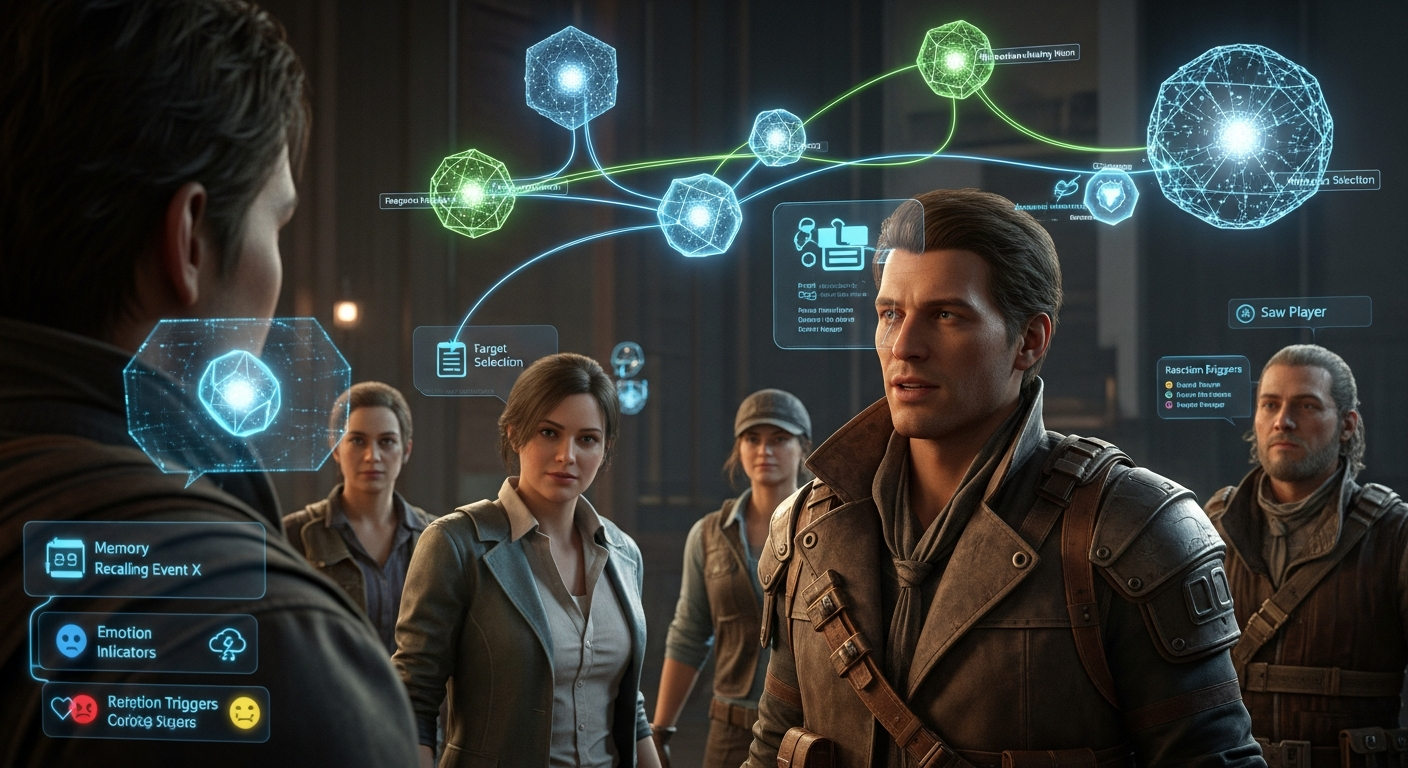
3. Advanced NPC Systems & Social Simulation
RPGs rely heavily on meaningful NPC interactions.
NPC systems include:
Daily routines
Dynamic reactions
Faction behaviors
Memory systems
Dialogue branching
NPCs give the world depth and personality.
4. Real-Time Combat Evolution
RPG combat has evolved from turn-based systems to hybrid or fully real-time systems.
Features include:
Timing-based attacks
Dodge/counter mechanics
AI-driven enemies
Weapon types & skill trees
Combo systems
Magic and abilities tied to physics
Hybrid combat offers the strategy of turn-based systems with real-time intensity.
5. AI Systems Powering RPG Depth
AI plays an essential role in:
Enemy behavior
NPC schedules
Procedural world updates
Adaptive difficulty
Dynamic storytelling
AI will play an even larger role in future RPGs, aligning with insights in how AI in gaming is shaping the future of play.

Key Trends Shaping Next-Generation RPGs
1. AI-Driven Narrative Systems
AI will help create:
Dynamic quests
Personalized story arcs
Adaptive NPC dialogue
Reactive world events
2. Procedural Environment Expansion
Worlds will grow and evolve dynamically.
3. Immersive Cinematic Performance Capture
More studios will use full performance capture for emotional storytelling.
4. Hybrid Combat Systems
Real-time and tactical systems will merge for deeper gameplay.
5. Persistent Open Worlds
Worlds that:
Change permanently
React to player choices
Feature ecosystems that grow or decline
6. Multiplayer RPG Experiences
More games will blend single-player depth with online collaboration.
Why RPG Games Continue to Evolve?
Because player expectations evolve.
Gamers want:
Immersive stories
Emotional connection
Agency and impact
Visual fidelity
Replayability
World reactivity
RPGs evolve to meet these emotional and experiential demands.
Conclusion
RPG games have come a long way—from simple turn-based adventures to cinematic, open-world experiences fueled by mocap, animation, AI, and real-time rendering. The genre continues to evolve as developers push the boundaries of storytelling, exploration, NPC interaction, and combat. RPGs are no longer just games—they are worlds where players build identities, make choices, and experience unforgettable journeys.
With advanced 3D modeling, expressive animation, cutting-edge AI, and worldbuilding expertise, Mimic Gaming helps studios craft deeper, more dynamic RPG experiences that resonate with players and define the future of interactive storytelling.
FAQs
1. What defines an RPG game?
An RPG focuses on character progression, storytelling, exploration, and choice-driven gameplay.
2. Are RPGs always open-world now?
Not necessarily—many remain linear or semi-open, but openness is increasingly common.
3. Do all RPGs use real-time combat?
Many do, but turn-based and hybrid systems remain popular.
4. Why do RPGs rely so heavily on NPCs?
NPCs bring social depth, worldbuilding, quests, and emotional connection.
5. How important is art direction in RPGs?
Critical—worlds must feel cohesive and purposeful.
6. Do RPGs use motion capture?
Nearly all AAA RPGs use mocap for realistic movement and cinematic scenes.
7. Will AI change the future of RPGs?
Yes—AI-driven narratives, characters, and procedural worlds will dramatically change the genre.
8. What makes a great RPG?
Strong storytelling, immersive worlds, expressive characters, meaningful choices, and engaging progression.
 December 30, 2025
 November 21, 2025
 November 17, 2025