
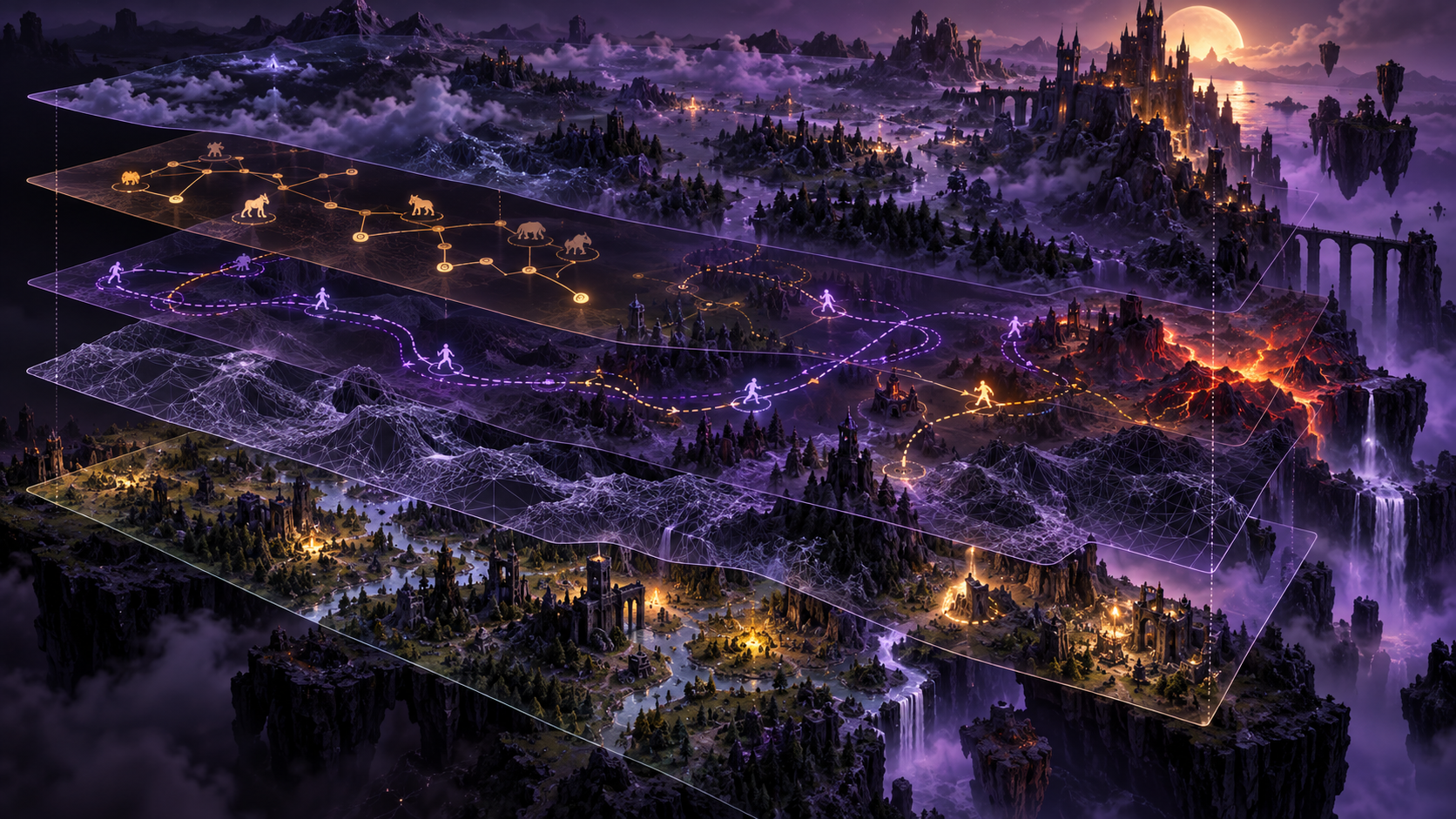
AI has become the backbone of modern game development. What started as experimental tools for automating small tasks has now evolved into fully integrated systems that support art creation, animation, testing, world building, balancing, and optimization. Studios of all sizes, from indie creators to AAA publishers, are adopting AI not to replace developers but to accelerate workflows that previously slowed production timelines.
Today, game development teams use AI to create environments, animate characters, support procedural design, generate variations, and even analyze gameplay patterns before a title launches. The result is faster production, lower costs, and more creative freedom. Behind the scenes, AI systems are optimizing tasks that used to take hours or days, making developers more efficient and allowing studios to focus on the parts of game creation that truly matter: story, design, and emotional experience.
This article explores why AI is now a standard tool in modern game development and how studios use it to work smarter and deliver better games.
AI Helps Studios Build Worlds Much Faster
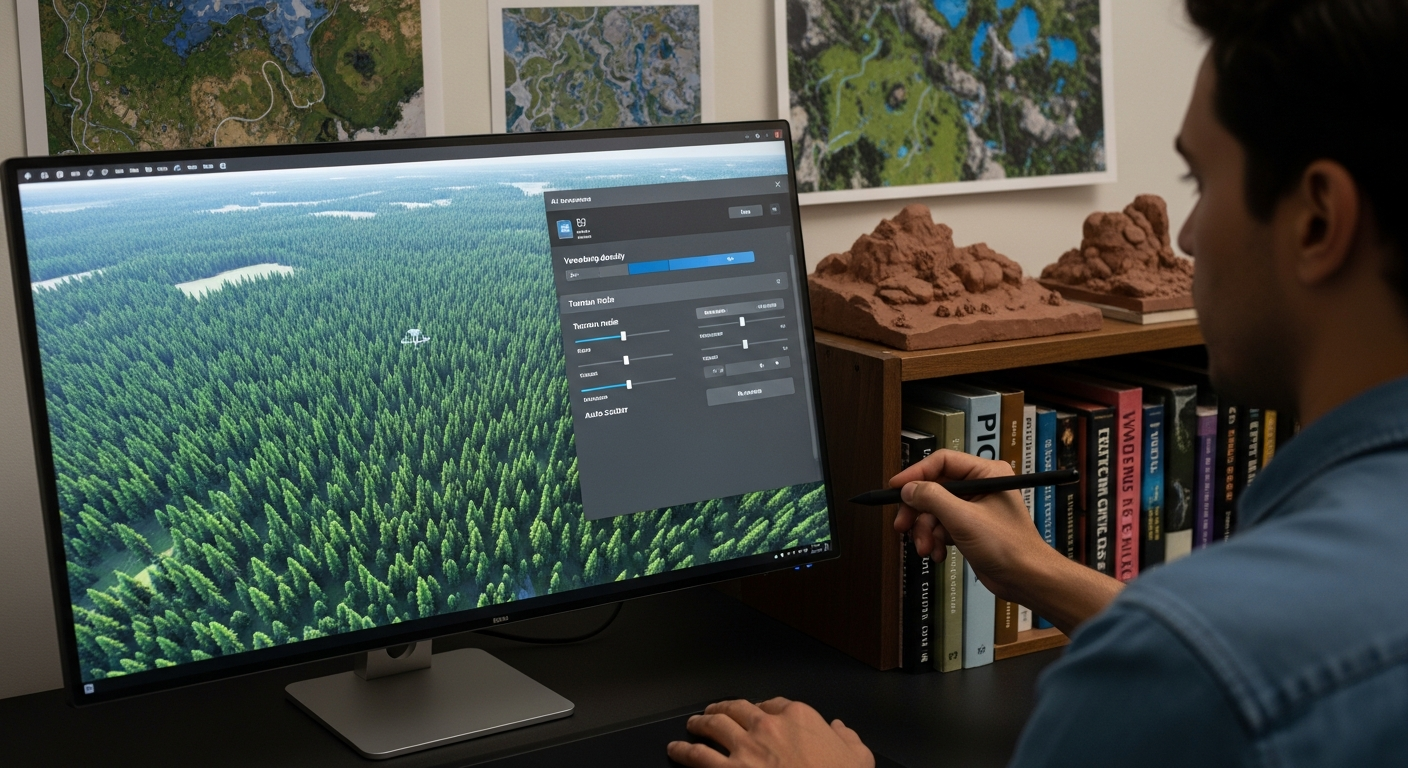
Game environments are often the most time consuming assets to create. Artists and level designers spend hundreds of hours shaping terrain, placing props, and creating variations that help the world feel alive. AI speeds up this work significantly.
Procedural systems can generate forests, cities, terrain layouts, and background structures in minutes. Developers then refine the output rather than building everything by hand.
These world-building pipelines connect naturally to principles described in game environment design insights, where layout, believability, and emotion make the environment feel real.
Benefits for world-building
automated terrain sculpting
large scale object scattering
quick biome generation
day and night cycle presets
instant color and texture variations
AI gives artists more time to focus on creativity rather than repetition.
AI Accelerates Animation and Character Workflows
Character animation is one of the most resource-intensive parts of game development.
AI models now support animators by:
producing motion variations
smoothing transitions
analyzing gameplay movement data
adapting animations to different body types
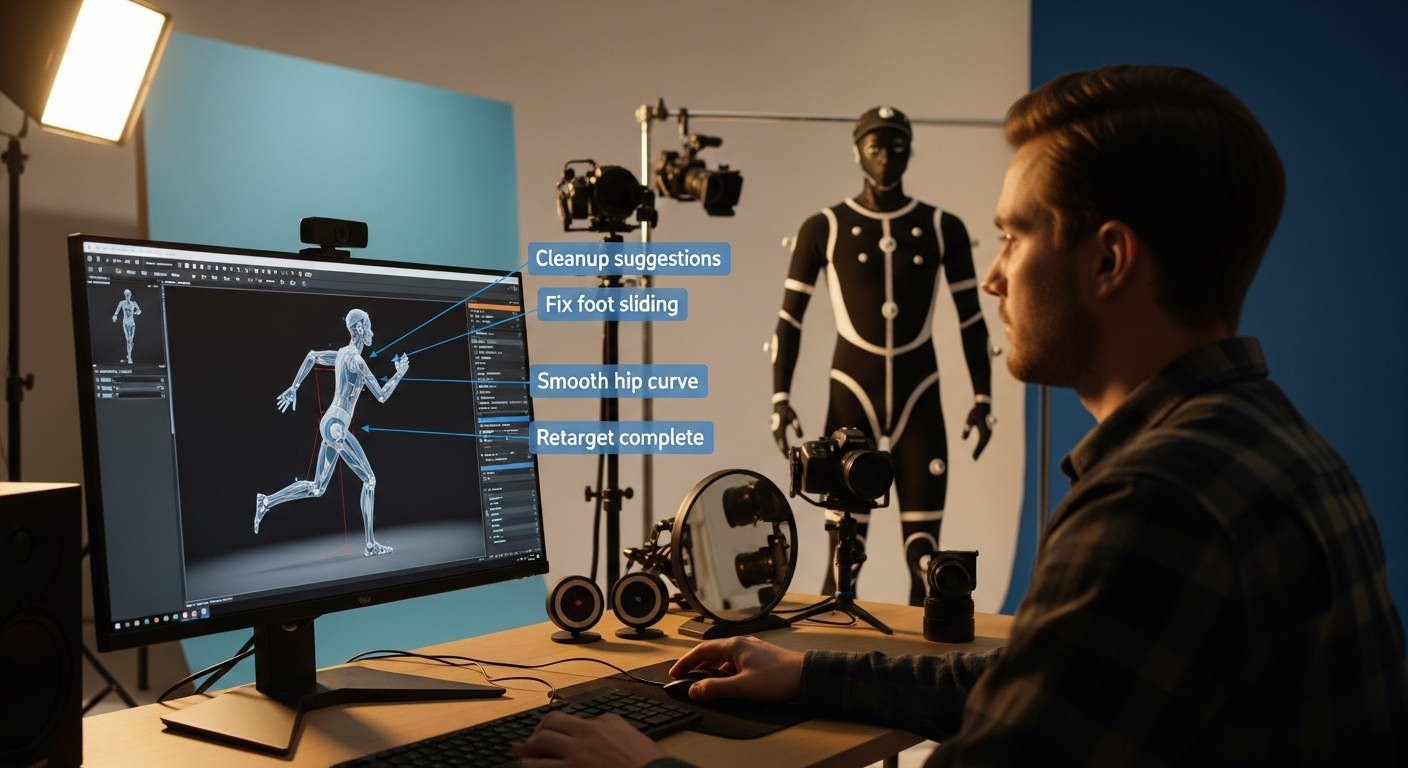
converting rough motion capture into clean, usable clips
Studios that rely on performance capture, similar to the principles shown in mocap-driven character workflows, now use AI tools to clean and retarget data automatically.
AI improves
natural movement
combat flow
facial expression accuracy
lip syncing
idle animation variety
Developers get better results with far less manual cleanup.
AI Boosts Asset Production Across Art Pipelines
Concept art, modeling, and texturing have always been time-heavy tasks. AI supports artists by providing rapid idea generation and accelerating repetitive work.
Examples of AI-supported asset production
quick concept sketches for early idea testing
3D mesh variations generated from a single model
automatic UV unwrapping
texture upscaling for better performance
color and lighting adjustments based on references
Studios often integrate AI at the earliest stage of visual ideation. This complements the more detailed modeling pipelines explored in 3D art and asset creation methods.
Artists still control the style and direction, but AI handles time-consuming steps in between.
AI Helps Designers Balance Games More Effectively
Game design depends heavily on testing, balancing, and iteration. AI simulation tools help designers predict the outcome of:
combat encounters
skill tree progression
economy changes
crafting systems
enemy behavior patterns
AI can run thousands of playthroughs and highlight issues long before human testers encounter them.This reduces late stage redesigns and improves game stability.
AI design tools can
identify difficulty spikes
test various player paths
analyze resource flow
simulate player decision patterns
Designers make informed decisions faster and reduce the risk of imbalance.
AI Enhances Playtesting and Bug Detection
Testing is one of the most expensive parts of game development. AI powered agents now perform automated playtesting to check for:
collision issues
level exploits
progression blockers
animation clipping
economy imbalance
performance bottlenecks
AI testers can play the same level hundreds of times in minutes and detect patterns that humans normally miss.This helps QA teams focus on edge cases and nuanced gameplay feedback.
AI Supports More Dynamic NPC Behavior
NPCs help shape the personality of a game world. AI models support developers by enabling NPCs that react intelligently to player behavior.
Examples include:
evolving dialogue
adaptive enemy strategy
emotional response simulation
memory based interaction
personalized story reactions
The emotional and behavioral impact of smart NPCs aligns with ideas explored in NPC design insights.
Smarter NPCs mean more believable games without requiring massive manual scripting.
AI Shortens Production Cycles for Small and Large Studios
One of the biggest reasons every studio is using AI is speed. Game development can take years, and AI reduces timelines across almost every department.
Production cycles shrink because
development teams automate repetitive tasks
designers get instant prototypes
artists generate faster variations
QA finds issues early
story teams test pacing and flow dynamically
Smaller studios can build large-scale experiences that were once impossible. Larger studios can push more detail into worlds without delaying release schedules.
AI Strengthens Creativity Instead of Replacing It
Contrary to fear-driven narratives, AI tools do not replace creativity. They remove friction from production so developers can focus on intentional creation.
AI helps developers
explore more ideas quickly
test concepts before committing
polish assets efficiently
personalize gameplay for players
expand the size of game worlds
refine systems based on player behavior
Instead of limiting creativity, AI opens new possibilities.
The Future of AI in Game Development
Over the next few years, AI will influence development in deeper ways.
Trends to expect
real time adaptive storytelling
AI generated side quests based on player behavior
dynamic lighting reactions to emotional cues
automatic asset generation pipelines
smart co pilot tools for designers and artists
AI powered procedural worlds at massive scale
Studios that adopt AI now will build the next generation of interactive experiences faster and more efficiently.
Conclusion
AI has become one of the most valuable tools in game development. It accelerates content creation, supports animation and world building, improves playtesting, enhances NPC behavior, and reduces costs across the pipeline. Studios no longer see AI as optional. It is a necessary part of modern production, helping teams build richer, more detailed, and more efficient game projects.
Mimic Gaming, supported by its services and technical expertise, helps studios integrate AI tools into production workflows that accelerate development and improve creative quality across projects.
FAQs
1. How does AI help studios speed up game development?
AI automates repetitive tasks, accelerates content generation, and supports faster testing.
2. Do artists lose control when using AI tools?
No. Artists still direct the style and vision. AI only supports workflow efficiency.
3. Can AI improve NPC behavior in games?
Yes. AI helps create NPCs with adaptive responses, varied emotions, and smarter decision-making.
4. Does AI make world building easier?
AI assists with terrain generation, object placement, and environmental variation.
5. Will AI replace developers?
AI accelerates tasks but does not remove the need for human creativity or oversight.
6. Does AI help with playtesting?
AI simulates game sessions quickly and identifies bugs that manual testers might miss.
7. What size studios benefit most from AI?
Both small and large studios see major benefits from workflow automation.
8. What is the future of AI powered games?
Dynamic storytelling, smarter NPCs, adaptive world behavior, and faster production cycles.
 June 18, 2026
 August 7, 2026
 December 7, 2025