
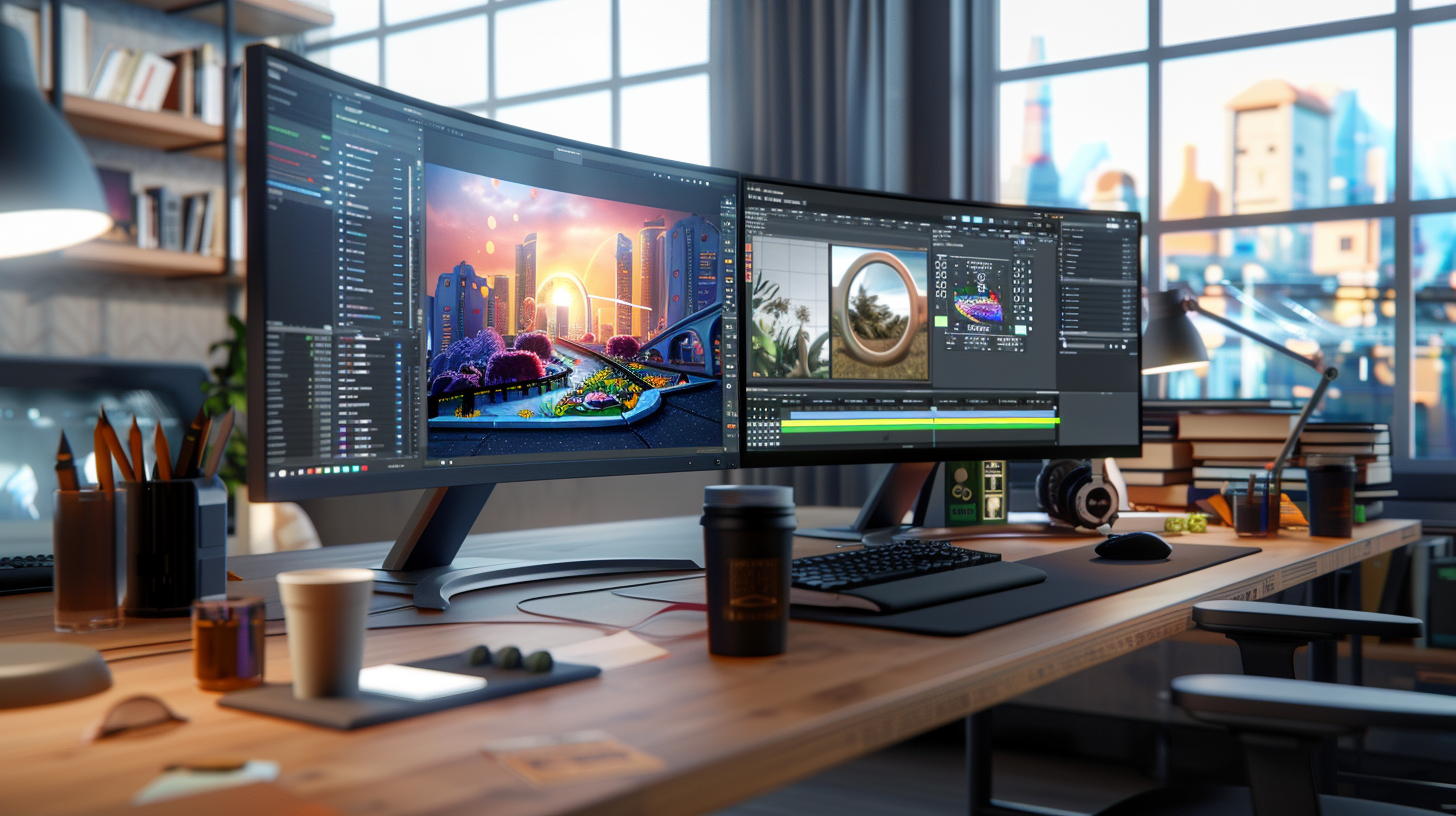
The debate of Unity vs Unreal is stronger than ever in 2025. With studios releasing larger worlds, more complex character systems, and advanced visual effects, choosing the right game engine matters not only for technical output but also for production efficiency, team workflow, and total development budget. Both Unity and Unreal have evolved significantly, adding AI tools, improved rendering pipelines, new animation systems, and better support for next-gen visual styles.
Whether a studio builds mobile games, indie titles, AAA experiences, VR worlds, or procedural ecosystems, the right engine affects every stage of development. Platforms like Mimic Gaming work across both engines, supporting pipelines for mocap, digital humans, VFX, environments, and cinematic performance. Knowing which engine fits your vision is essential.
This deep comparison of Unity vs Unreal in 2025 helps studios choose the right engine for performance, visuals, workflows, scalability, and production goals.
Table of Contents
What defines Unity and Unreal in 2025?
Engine performance and optimization efficiency
Visual quality and next-gen rendering
Tooling differences for animation and mocap
Table: Unity vs Unreal for different studio types
AI, procedural tools, and real-time workflows
Asset creation, art direction, and VFX support
Scaling to AA and AAA production demands
Platform deployment and ecosystem maturity
Budget, licensing, and long-term costs
What studios should choose in 2025?
Conclusion
FAQs
What defines Unity and Unreal in 2025?
By 2025, both engines will have undergone major upgrades:
Unity 2025
Better mobile and VR performance
Lightweight footprint
Improved URP/HDRP pipelines
Faster iteration cycles
Strong indie and mid-size studio adoption
Unreal Engine 5.x
Nanite for virtualized geometry
Lumen for real-time global illumination
MetaHuman integration for digital doubles
AAA-ready cinematic tools
Industry standard for high-end visuals
Studios choose based on project scale, rendering needs, and team expertise.
Unity excels at agile workflows and cross-platform reach, while Unreal dominates high-end visual storytelling and real-time cinematics.
Engine performance and optimization efficiency
Performance is influenced by:
rendering pipeline
hardware targets
number of assets
shader complexity
animation and VFX loads
Unity advantages
Unity remains king for:
mobile
2D
lightweight 3D
VR optimization
Its build sizes are smaller and runtime overhead lower.
Unreal advantages
Unreal wins in:
large environments
high-poly worlds
complex lighting
physics-heavy scenes
Its rendering tech is built for cutting-edge hardware.
This echoes insights from real-time rendering evolution, where Unreal’s powerful lighting and geometry systems outperform most engines in photoreal production.
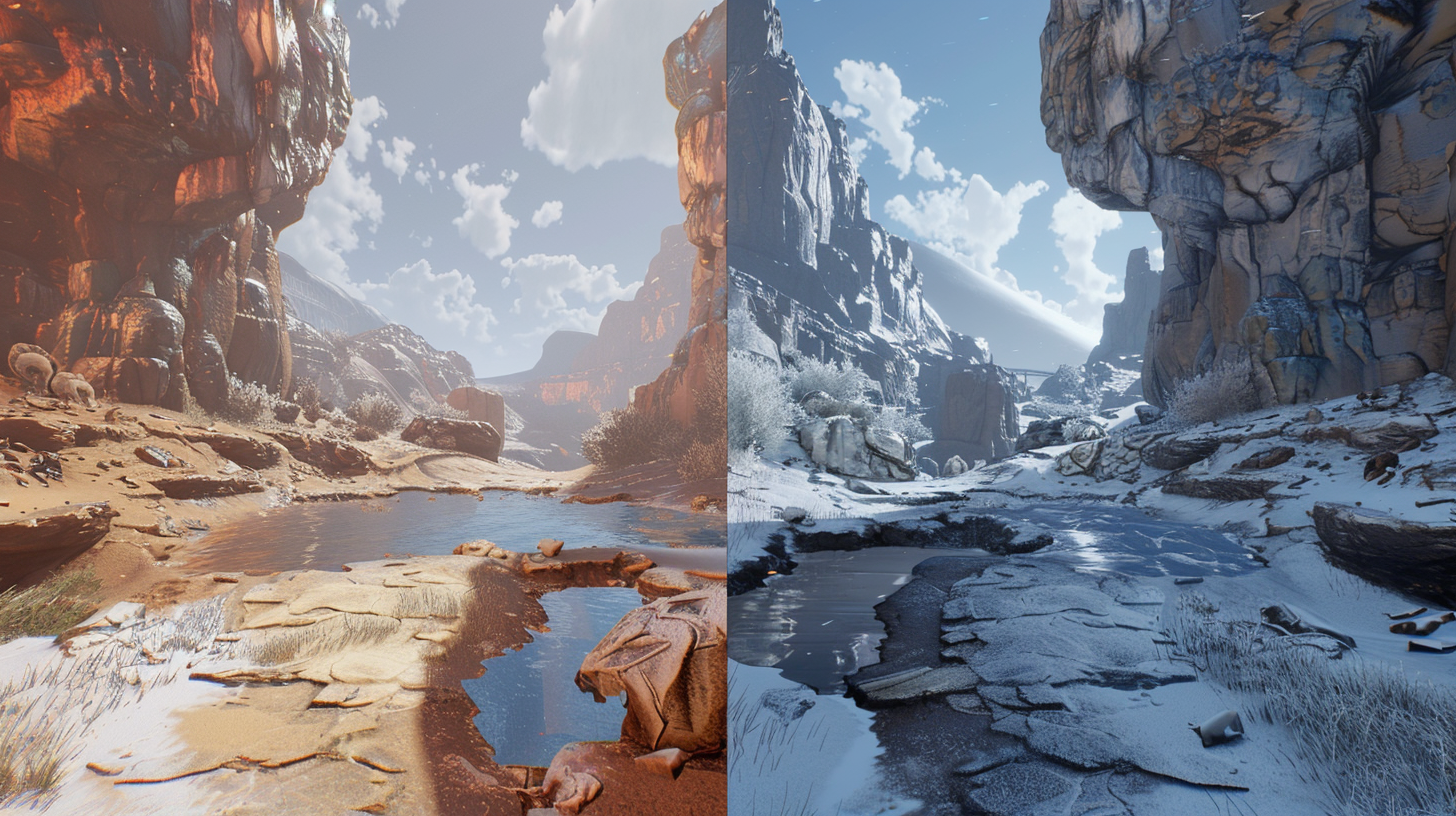
Visual quality and next-gen rendering
If a project requires photoreal characters, cinematic cutscenes, detailed environments, and film-like grading, Unreal remains the clear leader.
Unreal offers:
Nanite virtualized geometry
Lumen global illumination
Film-quality shading
High-end VFX workflows
Unity offers:
URP/HDRP for strong stylized or mid-level realism
Faster iteration
Lower technical overhead
Stylized games, indie titles, casual experiences, mobile games, and VR apps still run beautifully in Unity without the overhead of Unreal’s heavyweight rendering systems.
Tooling differences for animation and mocap
Animation pipelines differ significantly.
Unreal
Built-in real-time mocap support
MetaHuman Animator
Sequencer for cinematics
Native control rig
Ideal for AAA animation workflows
The mocap approach ties directly into game mocap pipelines explained here, where Unreal’s real-time playback, motion blending, and control systems make it a natural fit.
Unity
Excellent third-party integration
Flexible for custom rigs
Strong for indie animation workflows
Ideal for procedural or programmatic animation needs
Unity is more modular, but requires more setup.
Unity vs Unreal for Different Studio Types
Studio Type | Best Choice | Reason
Mobile studios | Unity | Lightweight builds, excellent optimization
Indie teams | Unity | Rapid iteration, lower overhead
Stylized game studios | Unity | Strong shader flexibility
AAA cinematic teams | Unreal | Best-in-class realism tools
VR developers | Unity | Performance-focused pipeline
AAA open-world teams | Unreal | Nanite + Lumen advantages
VFX-heavy productions | Unreal | Precise lighting and cinematic workflows
AI, procedural tools, and real-time workflows
Both engines now embrace AI:
Unity AI features
procedural world tools
AI-assisted authoring
rapid iteration workflows
Unreal AI features
procedural content generators
AI-assisted mocap cleanup
powerful simulation tools
Unity emphasizes speed.Unreal emphasizes fidelity.
Procedural and AI-driven pipelines also support the evolving worldbuilding approaches described in the future of AI in game development.
Asset creation, art direction, and VFX support
Unreal remains stronger for high-end VFX and cinematic workflows.
Unity is more flexible for stylized or mobile-focused effects.
The difference is notable in:
particle simulation
post-processing
cinematic tools
volumetric effects
For large VFX-driven games, Unreal typically wins due to its robust toolset and native visual fidelity.
Scaling to AA and AAA production demands
When scaling to:
large teams
multi-year pipelines
cinematic storytelling
motion capture-driven animation
expansive worlds
detailed character systems
Unreal remains the industry standard.
Unity can scale but requires more tooling setup and custom pipelines.
Platform deployment and ecosystem maturity
Unity still leads in:
mobile
VR standalone
2D hybrid platforms
WebGL
Unreal leads in:
next-gen consoles
high-end PC
cinematic VR
virtual production
Both engines are now used in film and animation, but Unreal dominates large-scale productions.
Budget, licensing, and long-term costs
Unity:
lower upfront cost
flexible pricing
ideal for small teams
Unreal:
more expensive at scale
royalties for high revenue games
free for learning and prototyping
For many AAA studios, Unreal’s cost is justified by its quality output.
What studios should choose in 2025?
Choose Unity if:
your team values iteration speed
your target platform is mobile or VR
your art direction is stylized
you want flexible scripting and modular systems
Choose Unreal if:
you need cinematic visuals
your project involves mocap and cutscenes
you are building AAA environments
your game requires advanced rendering and physics
Both engines are excellent. The right choice depends on your creative goals—not just the tool.

Conclusion
Unity and Unreal continue to define the landscape of game development. In 2025, Unreal leads in visuals and cinematic workflows, while Unity dominates mobile and rapid iteration development. Both engines offer powerful AI-driven pipelines and real-time capabilities. Studios should choose based on scope, style, performance goals, and team experience.
Mimic Gaming supports both pipelines with mocap, digital humans, VFX, scanning, and cinematic animation solutions.
FAQs
1. Which engine is better for beginners?
Unity is generally easier to learn.
2. Which engine gives better graphics?
Unreal offers higher-end visuals.
3. Which engine is best for mobile games?
Unity is the industry standard for mobile.
4. Can both engines build AAA games?
Yes, but Unreal is preferred for top-tier realism.
5. Is Unity good for VR?
Unity excels in VR optimization.
6. Do both engines support AI workflows?
Yes, both engines integrate AI and procedural tools.
 June 25, 2026
 August 17, 2026
 August 24, 2026